
Grappling / Brazilian Jiu-Jitsu
Brazilian Jiu-Jitsu
Brazilian Jiu-Jitsu is a grappling discipline built around ground positions, escapes and submissions. You use grips, balance and leverage to control a partner, while they actively try to regain space or improve their own position.
- Submissions
- Ground control
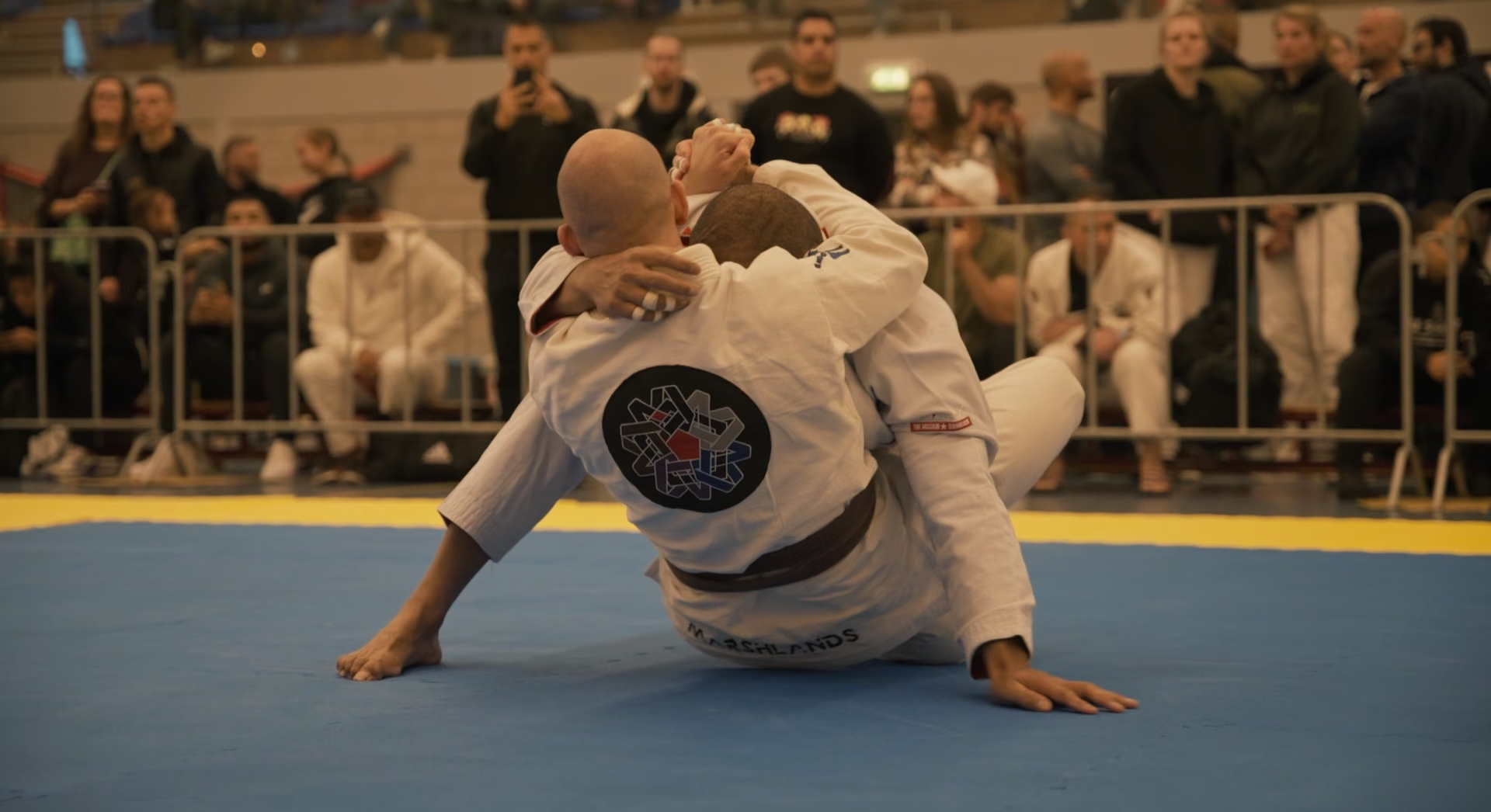
Understand the discipline
Control positions and look for a submission.
BJJ often starts standing, but much happens on the ground. The person underneath can use their legs as a guard; the person on top tries to pass them and establish control.
The gi provides fabric grips for control and attacks. Submissions use joint locks or chokes, so recognising a tap and releasing immediately are part of learning from the start.
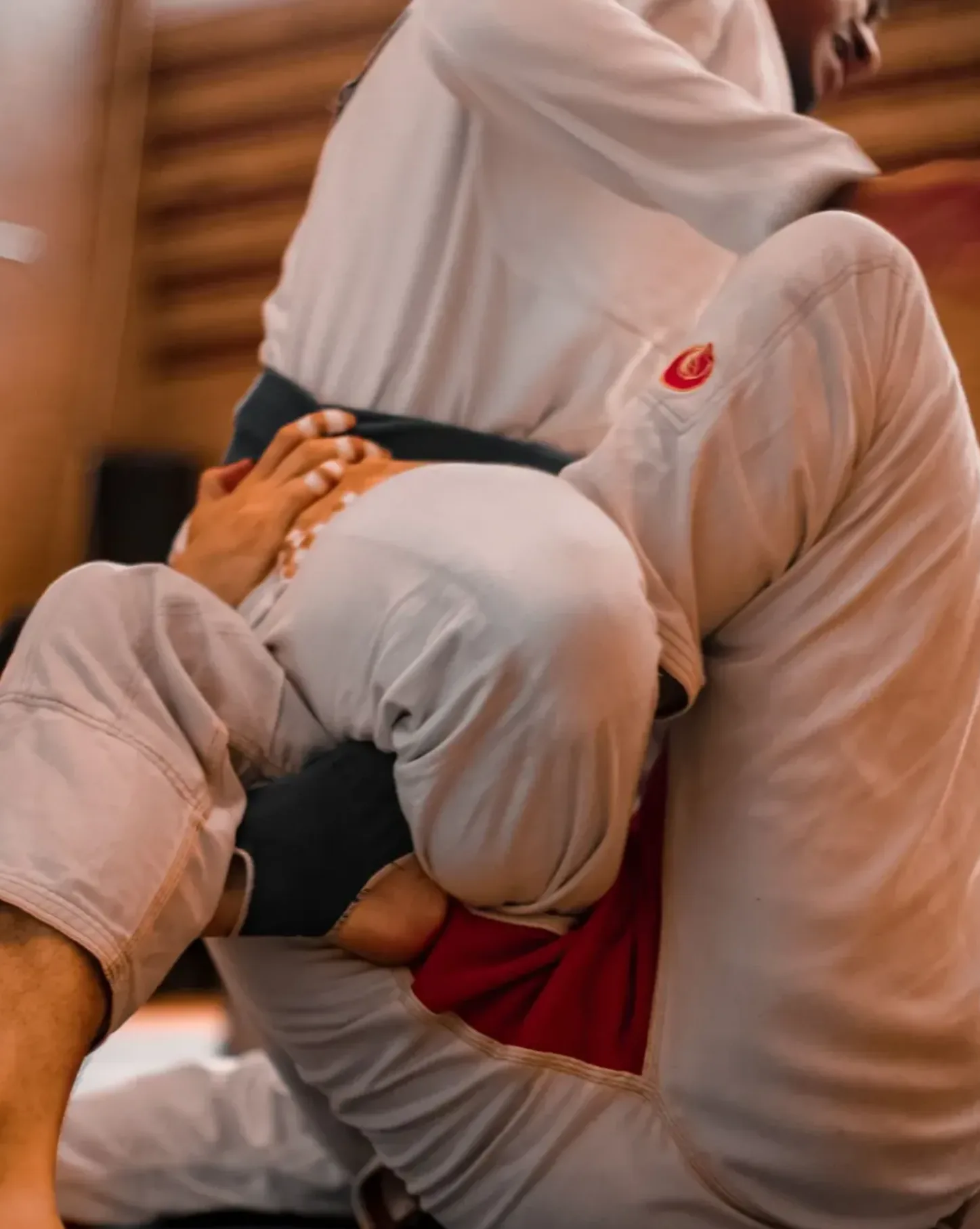
What you practise
Escapes, guard, passes and submissions.
Learn to defend from underneath, improve your position and recognise when an attack is available.
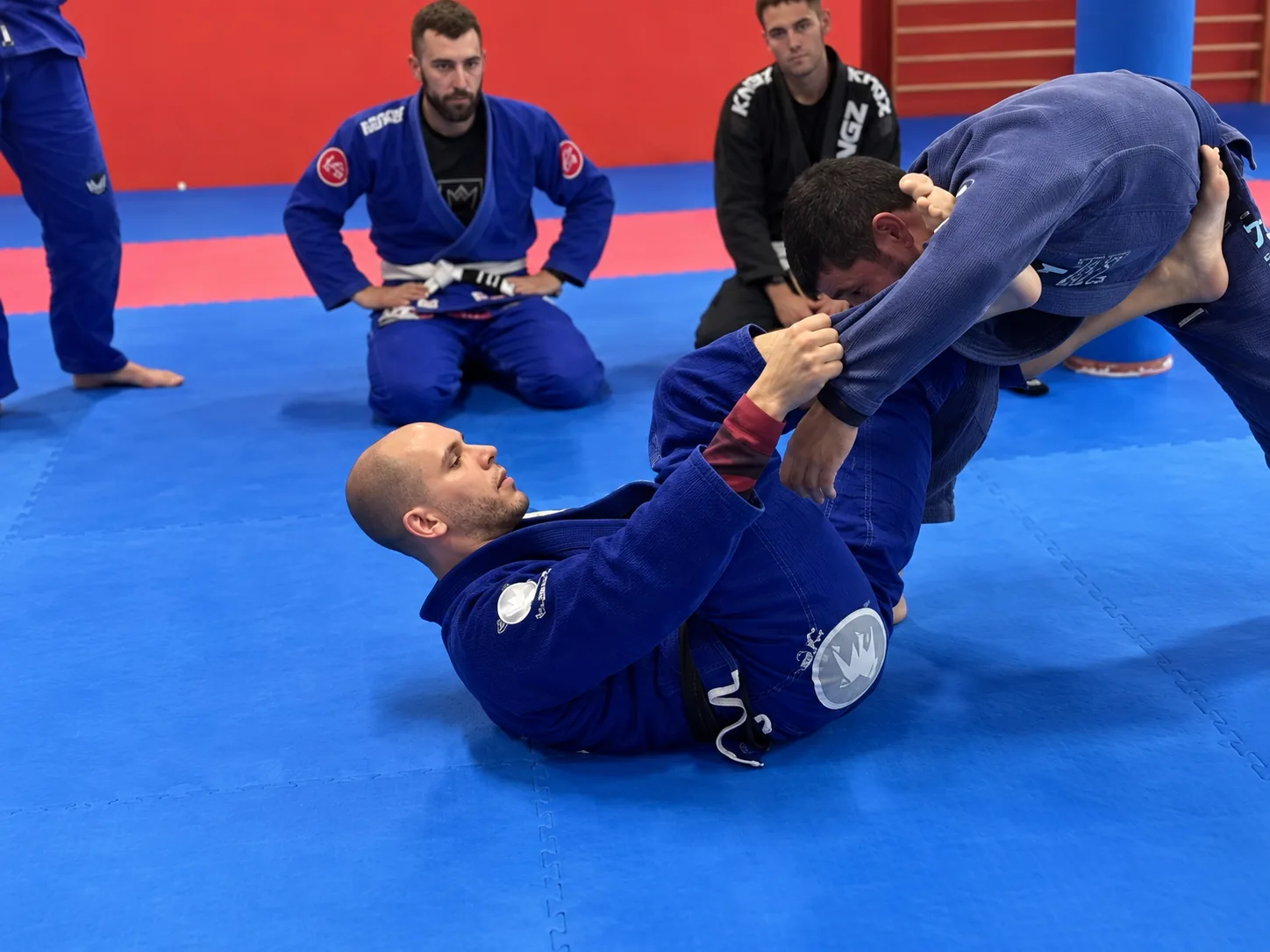
Defend and escape
Protect your neck and limbs, create space with frames and recover from difficult positions.
Control distance and sweep
Use your legs and grips to manage distance, upset balance and reverse the position.
Pass the guard
Move around or through your partner's legs and establish control on top.
Recognise and attack openings
Identify exposed limbs or the neck, secure control and apply a submission progressively.
Is this your kind of training?
Like wrestling and working things out?
Expect close contact and time on the ground. The appeal is working through positions with a partner, not exchanging strikes.
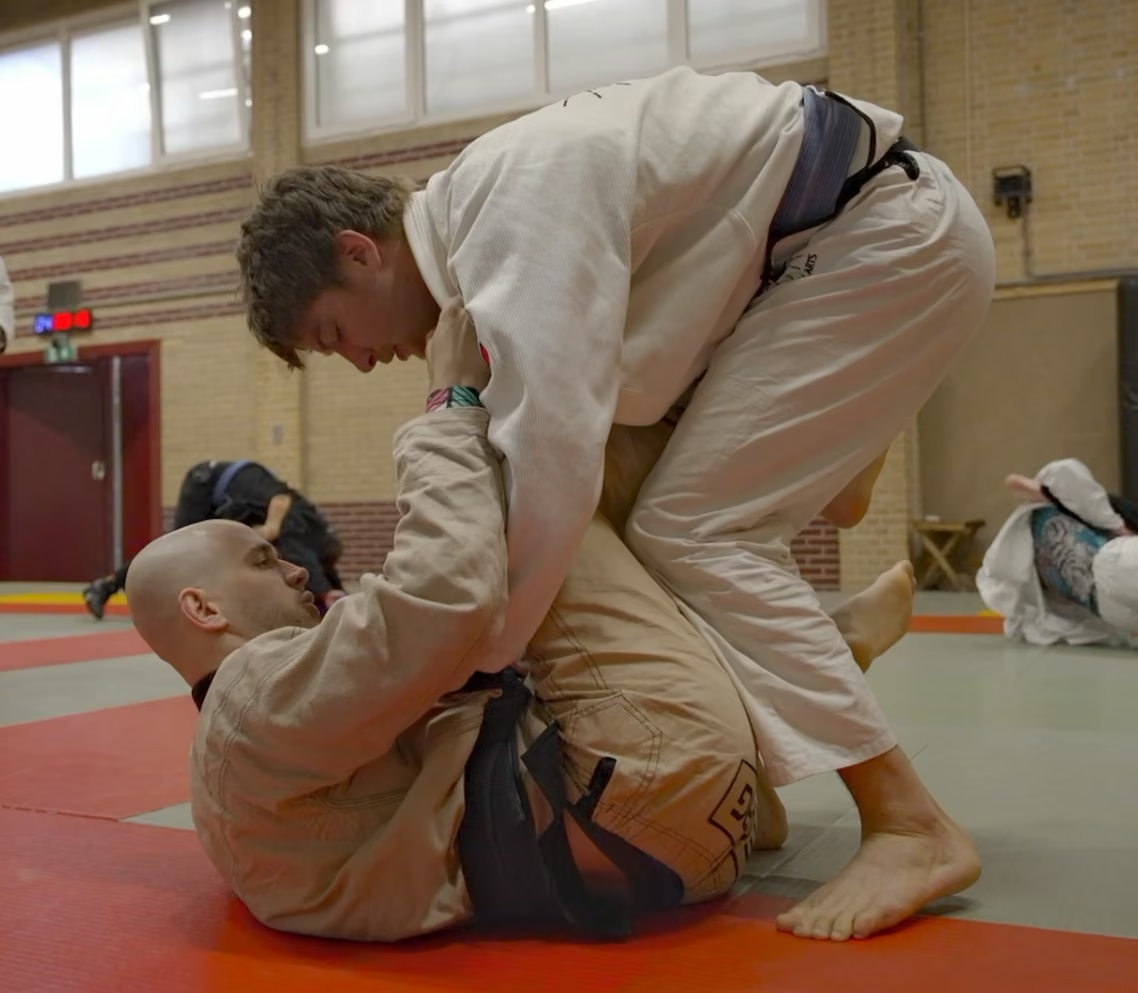
Train with me
Private BJJ coaching.
In Zwolle, we can build your fundamentals or focus on a difficult guard, escape or submission. Individual coaching and small-group training use partner resistance suited to your experience.
Zwolle / location by agreement
We agree on a suitable training space, equipment and focus before the session.
Frequently asked questions
Questions about BJJ
Can I start with no experience?
Yes. We start with positions, escapes and how to tap out. Then we add resistance and simple attacks.
Do I need to be flexible?
You do not need unusual flexibility. We choose movements and positions that suit your mobility.
Do I need to bring a gi?
These sessions include gi grips. We agree on what to bring and what equipment is available before starting.
What does tapping mean?
It is the signal to submit: tap your partner or say it aloud. Your partner releases the submission immediately.
Do strength and size matter?
Yes. Technique helps manage differences, but does not remove them. We adapt positions, partners and resistance to make the practice useful.
Do I have to compete?
No. You can train for the technical interest. If you compete, we can work on your positions and the event's rules.
Start with a position
What would you like to understand better?
Tell me about your BJJ experience and what you want to work on.