
Schools & children's groups

Martial arts that fit the children.

I bring martial arts into schools and existing children's groups through workshops and ongoing programmes. We practise movement, cooperation and personal boundaries, with tasks and contact adapted to the group.

Playful practice / clear boundaries / learning together

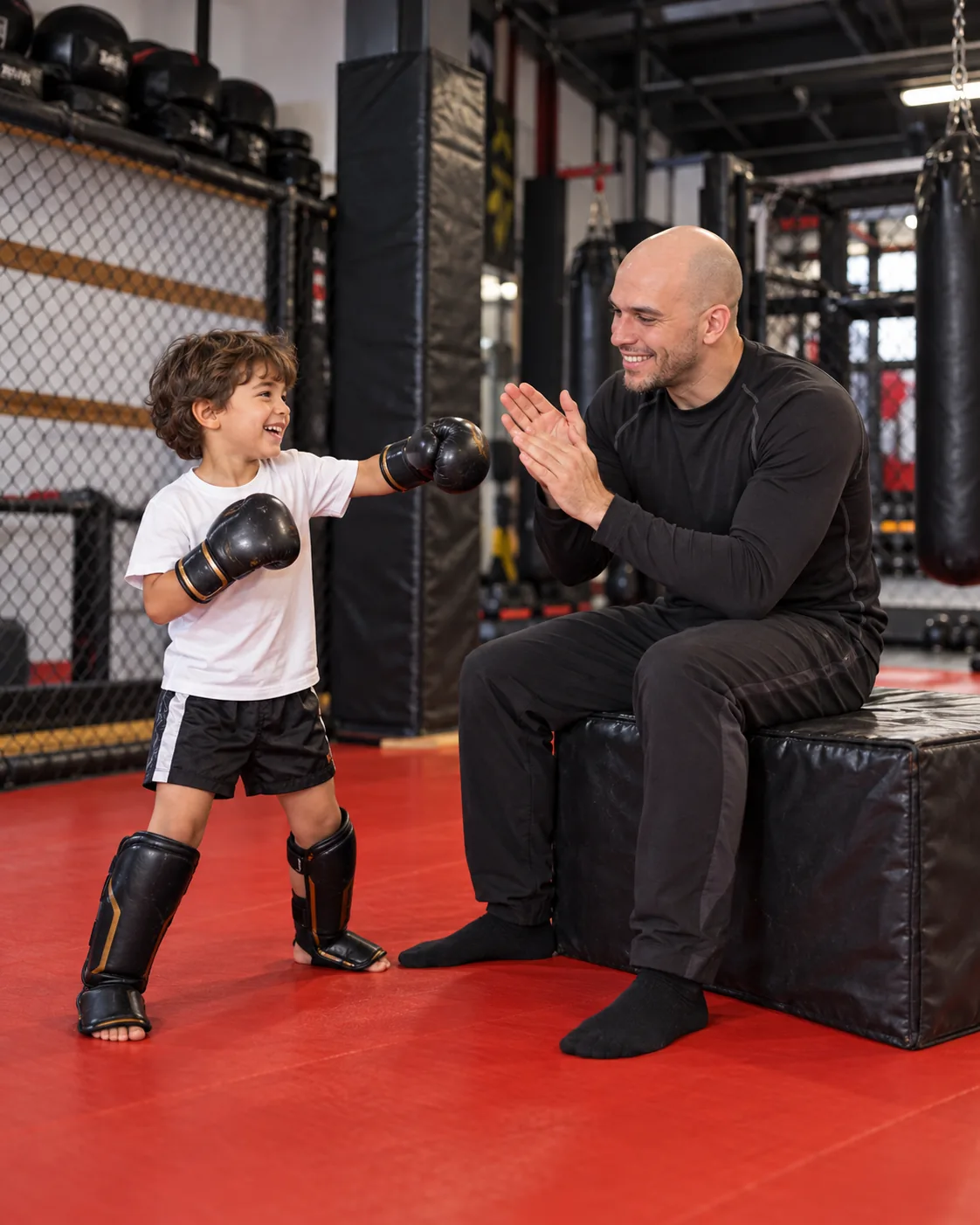
Víctor guiding a child during martial arts practice
Movementattentionrespect

Two ways to work together

A first experience. Or time to build on it.

A workshop can introduce a class to martial arts. A programme lets us return to the same skills and develop the practice with the group. We agree the focus and structure with the school or organiser.

Discover & try

School workshops

An active introduction for a class, sports day or existing children's group. We use simple movement games, pad work or cooperative tasks to explore balance, distance and clear agreements.

In practice: Try something new, practise together and finish with a shared reflection.
Return & develop

Ongoing programmes

A series of sessions arranged with your school or group. We repeat the fundamentals, revisit boundaries and gradually add choices as the children become familiar with the practice.

In practice: Make time for repetition, feedback and steady progress. Frequency and length are agreed together.

Adapted to the group

Different ages. Different ways to practise.

I adapt the language, pace and partner tasks to the children's development and experience. These examples show how that can look; they are not fixed entry requirements.

Early primary

Short, playful games: follow a movement, find your balance, notice your own space and practise a clear stop. Simple words and demonstrations keep the task easy to follow.

Partner work: Mostly individual or side-by-side games. Any partner contact is simple, gentle and closely guided.

Older primary

More structured tasks: coordinate footwork, control a pad strike and cooperate with a partner. We practise taking turns, explaining a boundary and asking an adult for help.

Partner work: Agreed light contact, clear roles and boundaries.

Teenagers

More choice and discussion: judge distance, use a clear voice and move towards space or help. We can explore everyday situations without asking anyone to share personal experiences.

Partner work: Controlled, supervised partner tasks with explicit agreement about contact and pace.

The group's needs guide the session. We discuss experience, accessibility, comfort with contact and any support needed beforehand.

Skills & values in practice

Move with control. Work with respect.

Striking and grappling give children different ways to work on balance, distance and control. I choose age-appropriate fundamentals, with clear roles, discipline and respect for their partner.

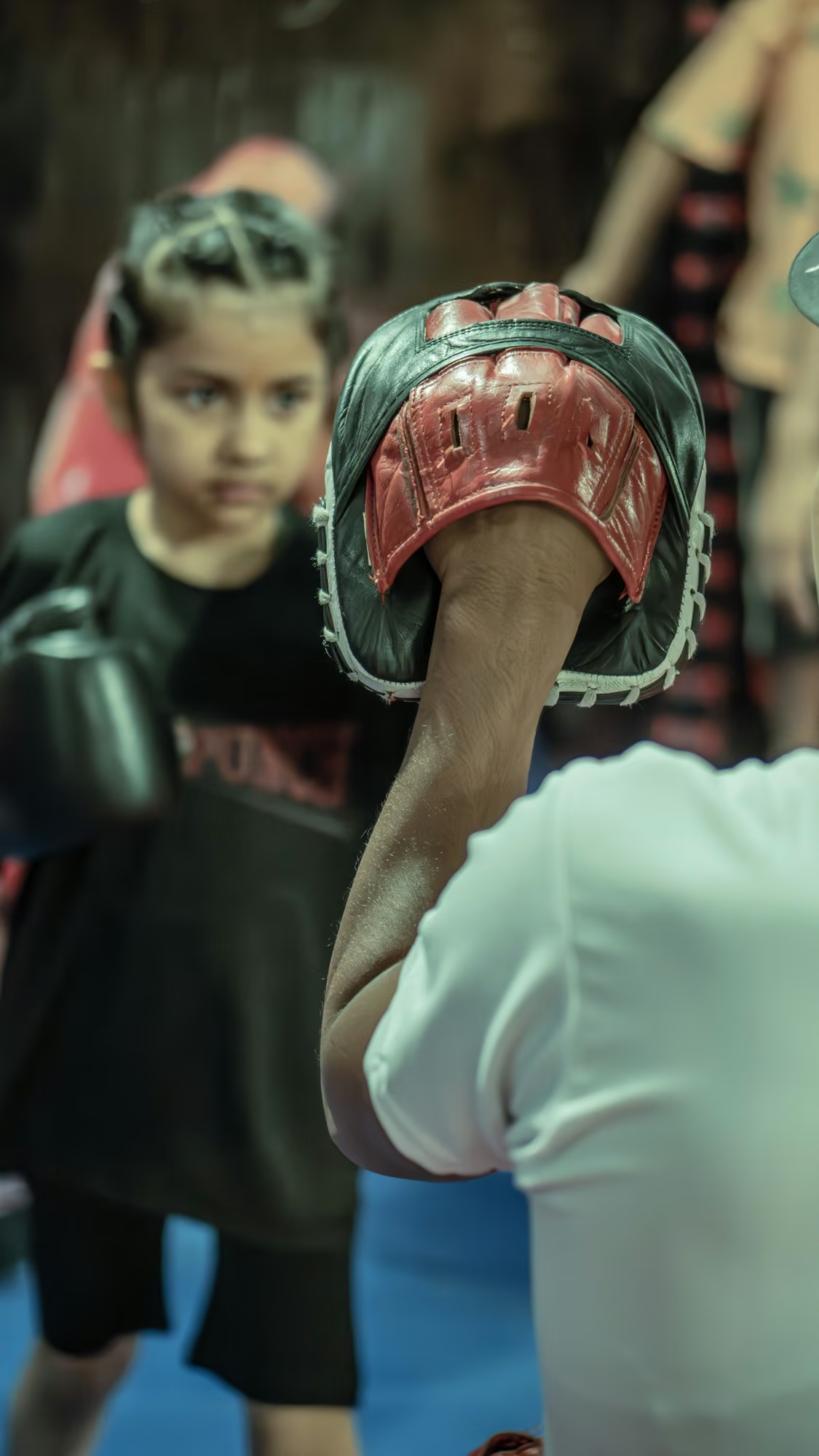
A child practising a boxing movement on a coach's pad
Guided practicecontrolled contact

Balance & distance

Find a stable stance, change direction and notice the space around you. Pad tasks give a clear target for controlled movement; cooperative balance tasks teach careful movement with a partner.

Respect & self-control

Listen carefully, take turns and control your strength. Children practise following instructions, keeping agreements and treating their partner with respect, even when a task takes several attempts.

Voice & asking for help

Practise saying stop, asking for space and finding a trusted adult. Older groups may try gentle releases from an agreed light grip, followed by moving away and seeking help.

We work on confidence through practice: repeat the fundamentals, use feedback and keep going when progress takes time. The challenge fits the child's age and experience.

Meet your coach

The boundaries of every session

Safety is part of the teaching.

A good introduction needs clear limits. These agreements apply to children's workshops and programmes, and we explain them in language the group understands.

No head strikes. No hard sparring.

Agree the contact

Partner contact is supervised, controlled and agreed beforehand. Tasks focus on movement, pads and cooperation, without forced submissions or pain-based challenges.

Stop means stop

Stop ends the contact immediately; nobody is forced to continue. Within those limits, I encourage children to work through unfamiliar or demanding tasks, listen to feedback and try again. Effort is part of learning; pain or unsafe contact is not.

Adults share clear roles

A school or group adult is present. Before the session, we agree supervision, support needs and how to handle concerns within the school's safeguarding arrangements.

Before we meet

Let's plan the session around your group.

I work with schools and existing children's groups in Zwolle and elsewhere in the Netherlands. These details help us choose a suitable workshop or programme and prepare the location.

01

Who's taking part?

Tell me the ages, group size, experience and what you want to practise. Share relevant accessibility or support needs so we can adapt the tasks and supervision.

02

Space & equipment

We check the available school gym or activity space together. Mats, pads, clothing and any other equipment requirements are agreed in advance; an alternative venue may suit some formats better.

03

Practical agreements

We agree the session length, dates, contact rules and adult roles before booking. For a programme, we also discuss frequency, the focus of the series and how to review it together.

Your school or group

What would you like the children to practise?

Send me the ages, approximate group size and your idea. We'll discuss the format, contact agreements and practical arrangements together.

Start a conversation