
Practical self-defence
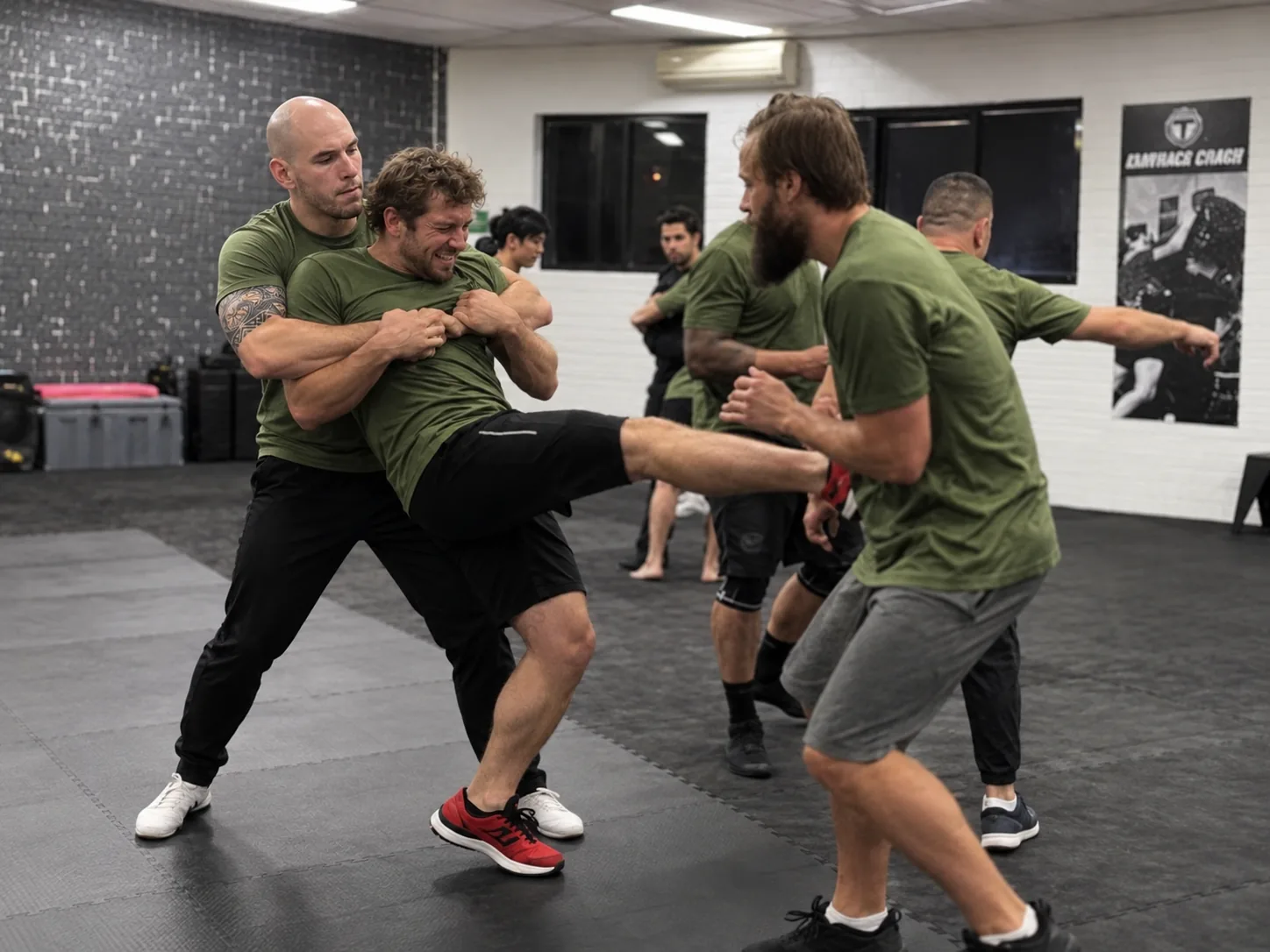
Practical self-defence focuses on physical confrontation: protecting against strikes, escaping grips, getting up and creating a way out. You practise using movement, control and, when needed, strikes to escape rather than stay and win a fight.
- Protection
- Escapes
- Striking
Understand the practice
Protect yourself and create a way out.
Avoiding confrontation and trying to de-escalate come first. This training covers what happens when a situation becomes physical: someone strikes, grabs you, holds you in a clinch or takes you to the ground.
The aim is to protect yourself, break contact and leave. That can involve covering, escaping a hold, getting back up or striking to create an opening. Resistance matters, but a training partner and agreed rules cannot reproduce every risk of a real confrontation.
Explore boundaries and de-escalation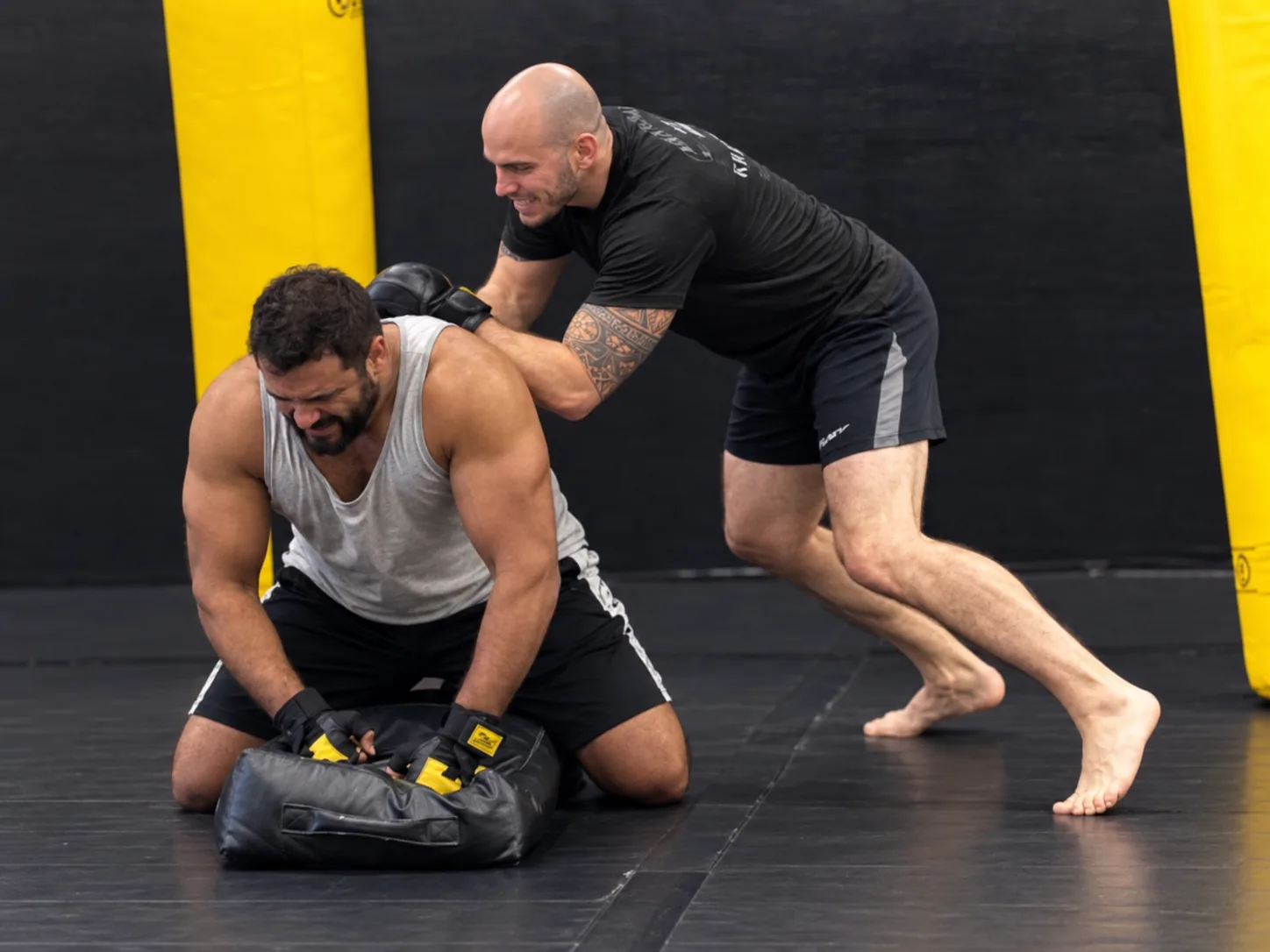
What you practise
Protect, break contact and move away.
Practise physical responses with a clear objective: create enough space to get away from the confrontation.
Explore the methodProtect against strikes
Use your guard, distance and movement to protect your head and create room to escape.
Escape grips and clinches
Work on posture, frames and grip releases against a partner who holds and resists.
Get up and create an exit
Practise returning to your feet, striking when needed to make space and moving away.
Is this your kind of training?
Want physical practice focused on getting away?
The goal is protection and escape, not winning a sporting exchange. Controlled training helps you explore options but cannot guarantee safety in a real confrontation.
Train with me
Private self-defence coaching.
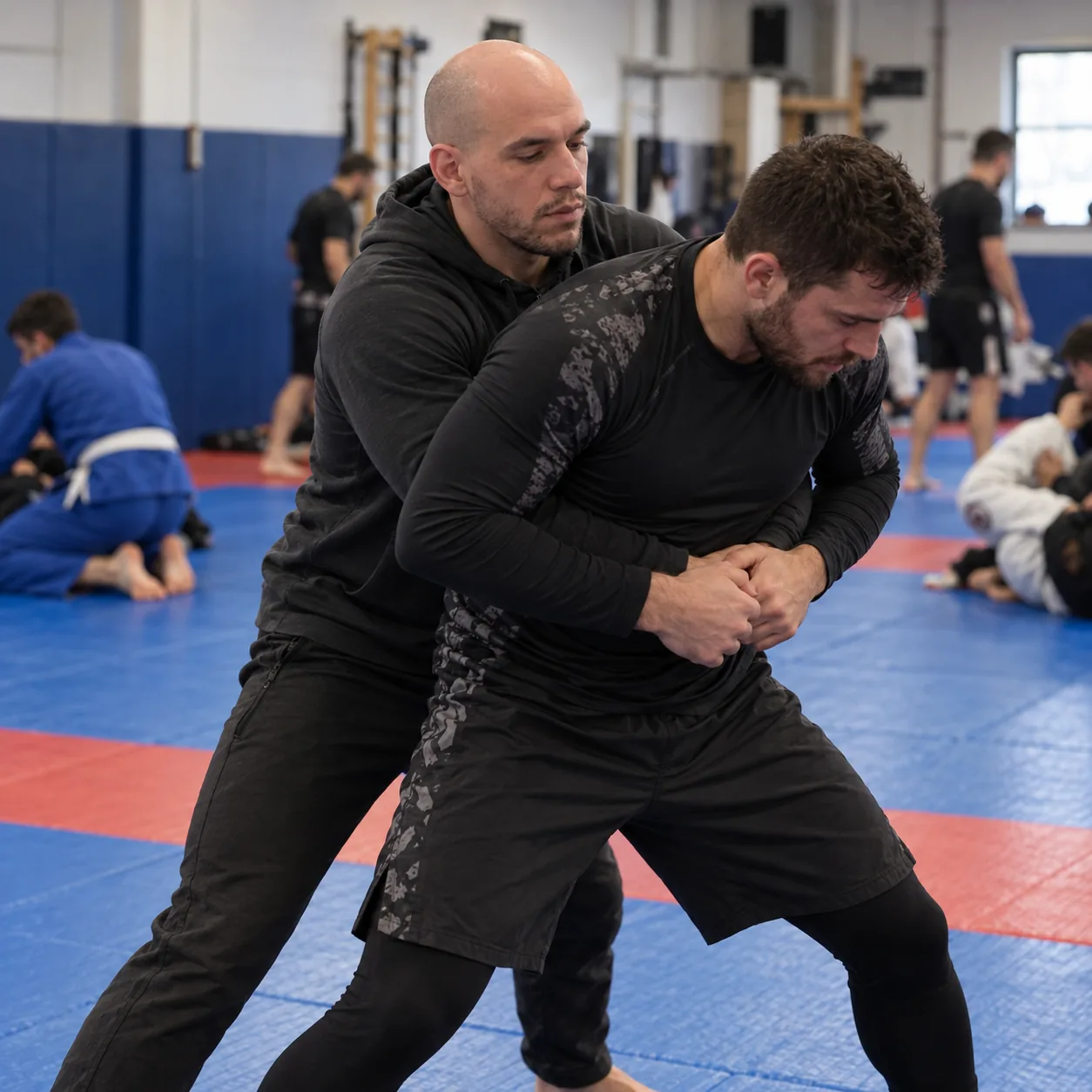
Individual sessions, small groups and workshops in Zwolle can focus on strikes, grips, clinches or getting up. We choose realistic tasks for your experience and train them with agreed contact and resistance.
Zwolle / location by agreement
The planned ground work, contact and group size determine the space and protective equipment we arrange.
Frequently asked questions
Questions about self-defence
Is this the same as training a martial art?
We use combat skills, but the aim is to protect yourself and get away. There is no sporting goal of scoring, submitting a partner or winning a round.
Do I need to be fit?
You do not need a particular fitness level to start. We adapt pace, positions and resistance to your mobility and experience.
How is contact practised?
Through specific tasks, protection suited to the work and progressive resistance. Practising with someone who responds lets you test the techniques.
Do we learn to strike?
Yes. We work on strikes using pads and targets, and how to use them to make space and break contact rather than prolong the exchange.
Do we also work on the ground?
Yes. We practise protecting yourself, recovering a base and standing up. Staying on the ground can leave you more exposed outside a sporting setting.
Does a technique always work?
No. Strength, surprise, space and other people change the situation. Training lets you test options and understand their limits, without guaranteeing an outcome.
Choose your focus
What do you want to learn to defend against?
Tell me about your experience and whether you want individual training or a workshop for your group.