
Personal safety / De-escalation
Personal safety and de-escalation
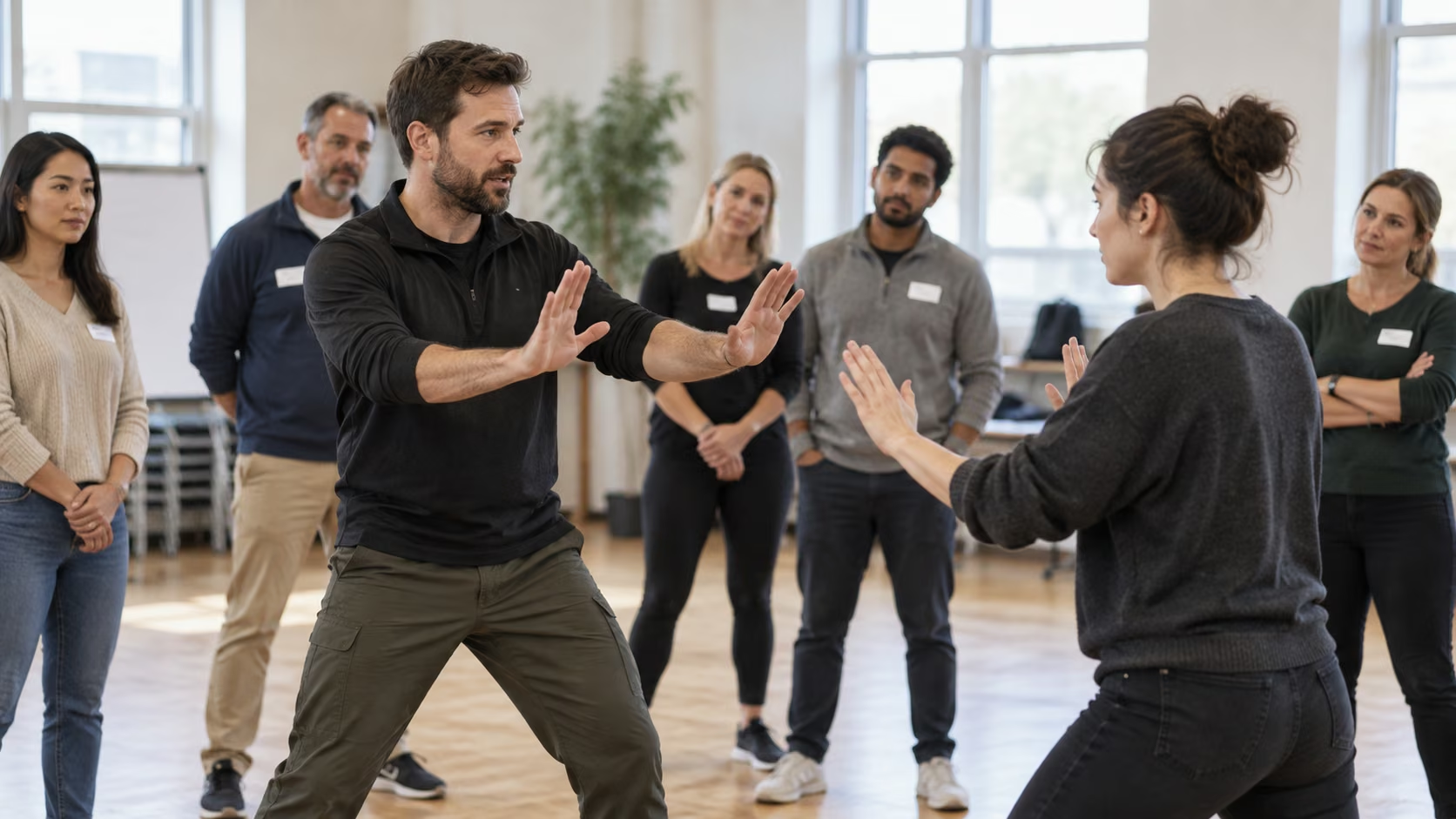
Personal safety training focuses on recognising risk, expressing boundaries and keeping space before a confrontation turns violent. You practise how to communicate, position yourself and leave, using realistic interactions rather than learning physical fighting techniques.
- Risk awareness
- Boundaries
- De-escalation
Understand the practice
Recognise risk before it turns physical.
The Dutch term weerbaarheid includes standing up for your boundaries under pressure. Here, the focus is recognising a difficult situation, avoiding unnecessary confrontation and expressing a limit clearly before someone becomes physical.
De-escalation uses words, tone, posture and distance to try to lower tension. You practise making space, noticing an exit and choosing when to leave or seek help. It cannot control another person's behaviour; if prevention fails, physical self-defence is a separate skill.
Explore physical self-defence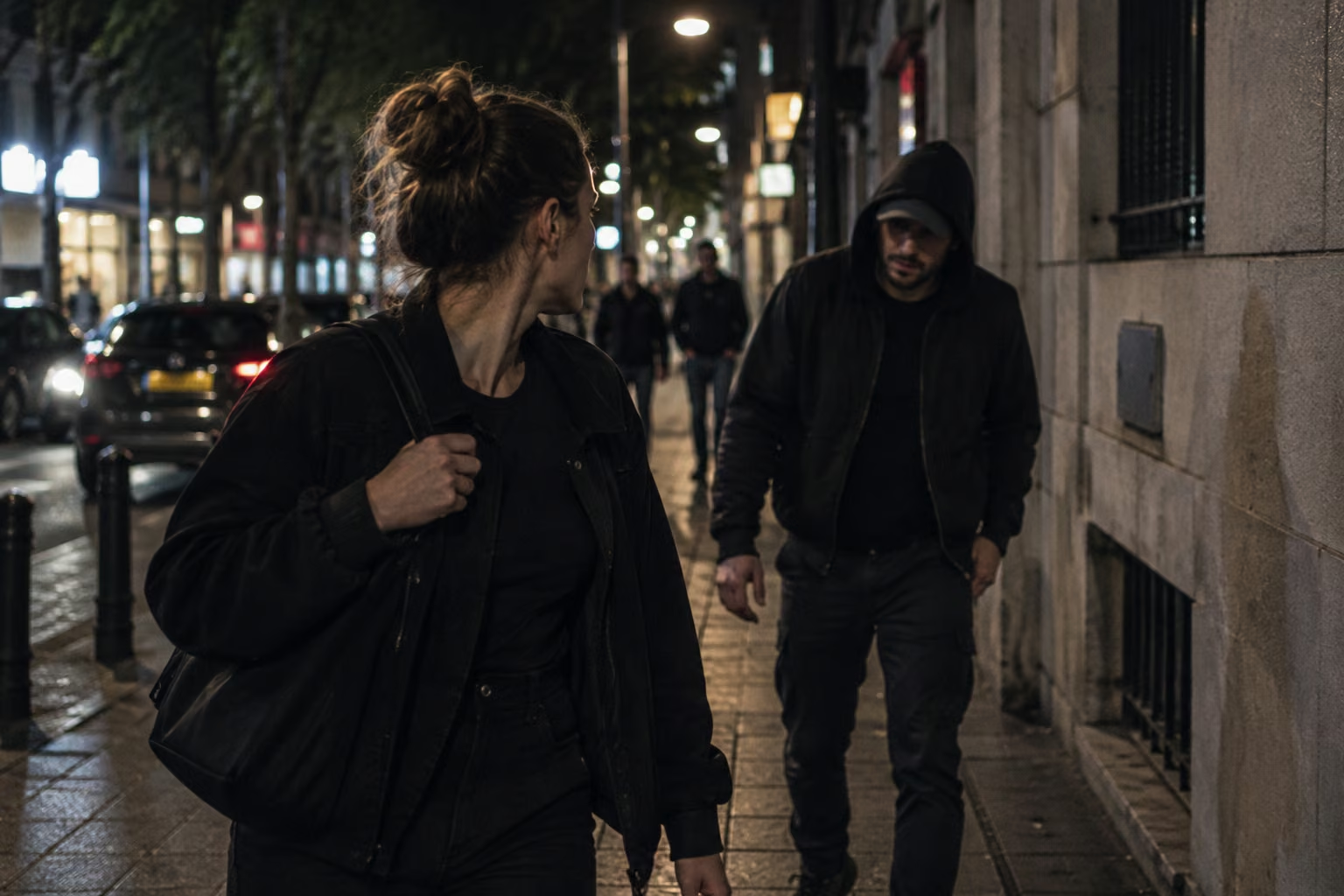
What you practise
Notice risk, set a limit and make space.
Practise realistic interactions where your words and position can help prevent an argument from becoming physical.
Explore the methodRecognise risk and avoid it
Notice rising tension, blocked routes and opportunities to leave before the situation worsens.
Express a clear limit
Practise direct words, a steady tone and posture that support what you want to communicate.
Make space and lower tension
Use distance, non-provocative communication and an exit route rather than arguing to win.
Is this your kind of training?
Want to handle pressure before it becomes physical?
The emphasis is communication, distance and choices in tense interactions, rather than combat techniques.
Train with me
Personal safety and de-escalation coaching.
Individual sessions, small groups and workshops in Zwolle use scenarios relevant to you. We practise recognising risk, setting boundaries and managing distance, then review which responses helped or increased tension.
Zwolle / location by agreement
We arrange the group size, setting and scenarios beforehand; school sessions are adapted to the age group.
Frequently asked questions
Questions before taking part
How does this differ from practical self-defence?
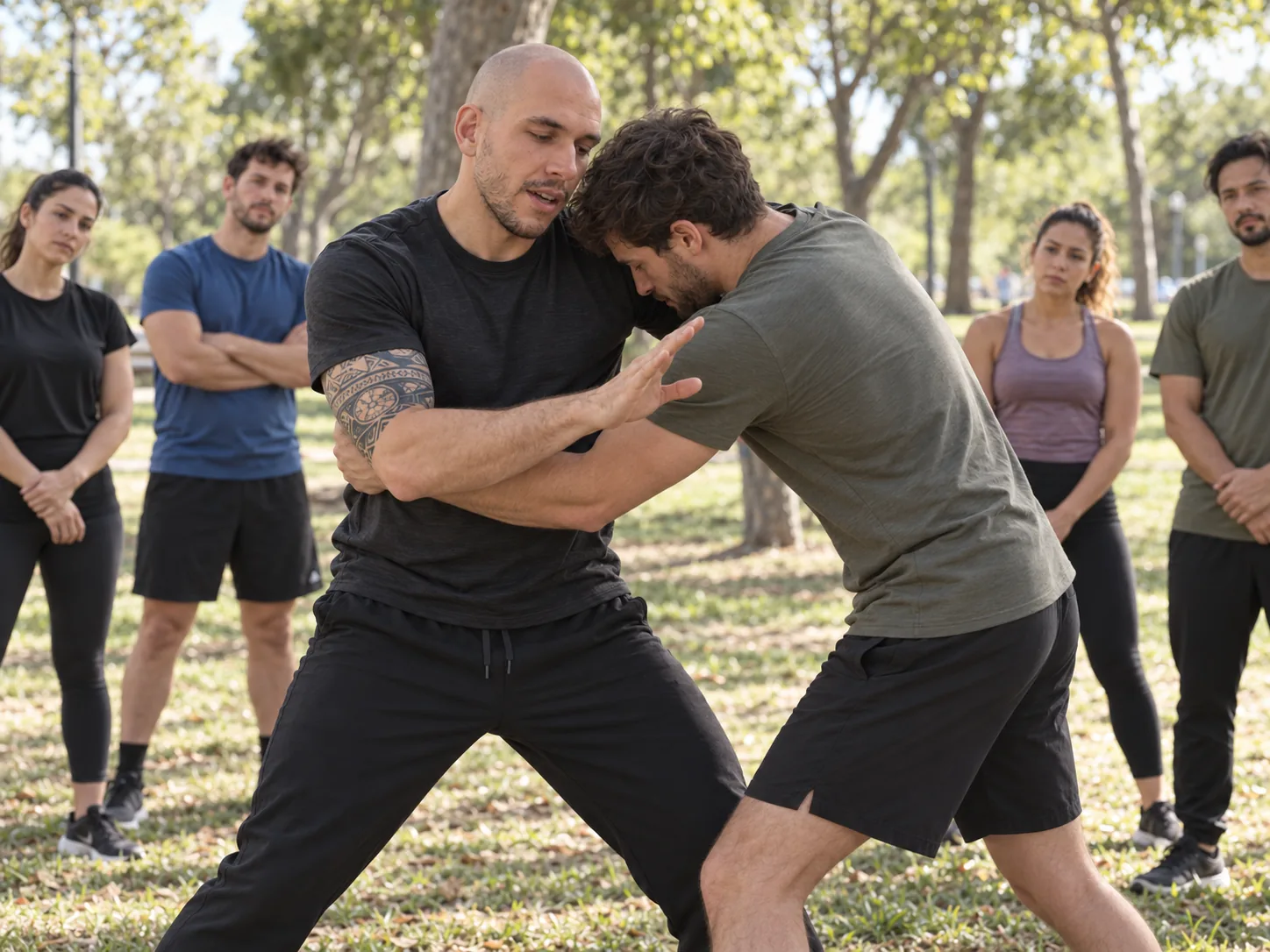
Here we work on prevention, boundaries and de-escalation before contact. Practical self-defence focuses on protecting yourself and escaping during a physical confrontation.
Is there physical contact?
It is not needed to practise observation, communication and distance. We can simulate another person's proximity without adding grips or strikes.
Can every conflict be calmed down?
No. The other person may keep escalating even when you communicate well. We also practise recognising when to leave or ask for help.
Can setting a boundary make a situation worse?
It can happen. We work on tone, distance and context; there is no obligation to argue and no phrase that works in every situation.
Can we work on situations relevant to my group?
Yes. We can adapt examples to what you encounter at work, school or in daily life, without exposing personal experiences.
What happens if the situation becomes physical?
The priority is still to leave and seek help. Protecting against strikes and escaping grips are practised in practical self-defence training.
Start with a situation
Where would clearer boundaries help?
Tell me about the setting, who would take part and the situations you want to practise.