
Exit
Locate a door or open route before starting.
Practise protecting yourself, releasing a grip and making room to leave. I guide your group through simple partner tasks, with attention to what you notice and say before physical contact.
Usually 1–3 hours · agreed with your group
Discuss this workshop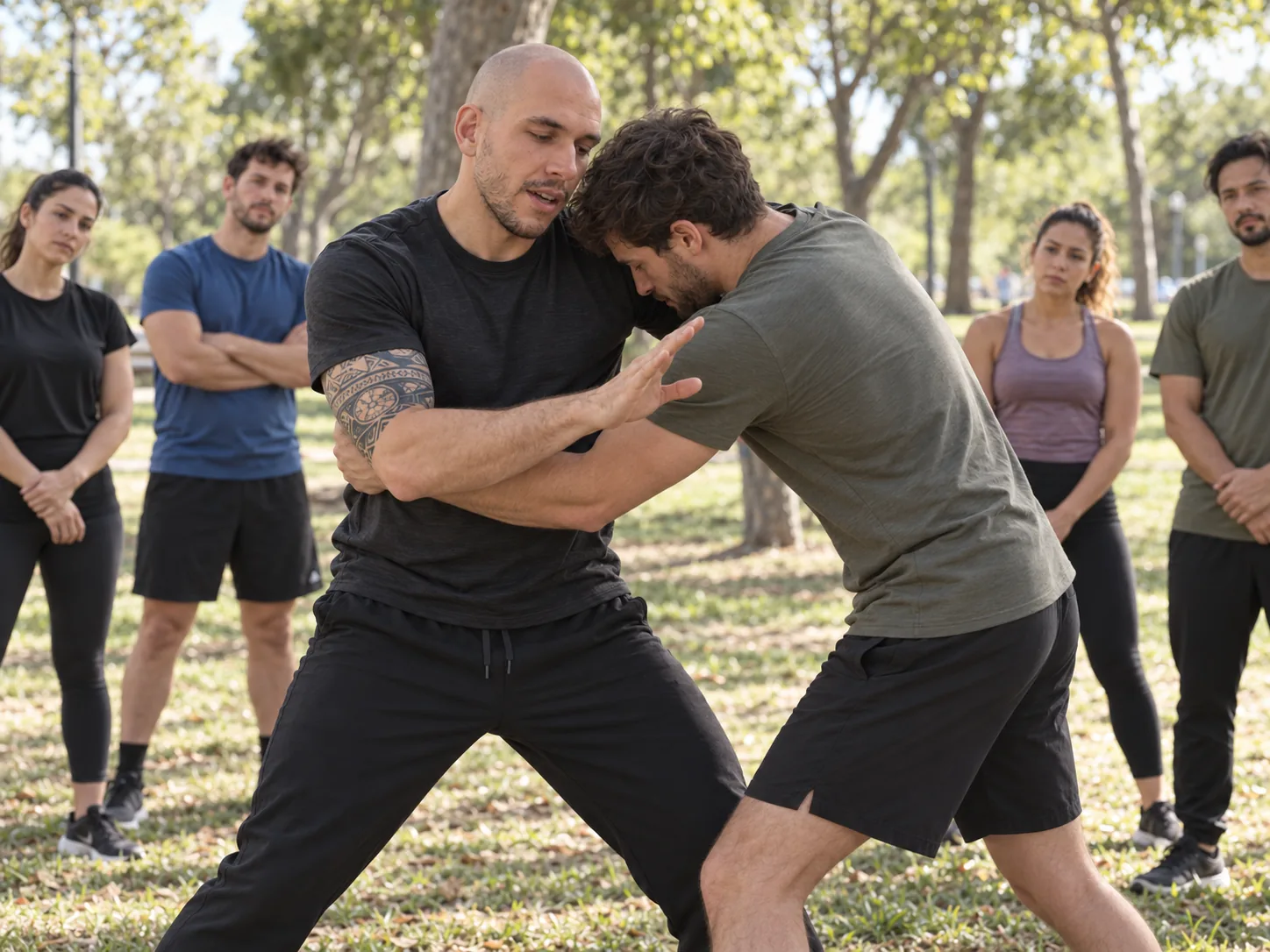
The workshop
We work with a few recognisable situations: someone approaching, grabbing or closing your space. I explain the physical task and help you adjust it with a partner. You also look for a route away, so each response has a purpose beyond the movement itself.
Your group
This introduction suits a group that wants to try self-defense together. No martial arts experience is needed. Tell me who is joining and which situations matter to you; I choose the starting point and agree the partner roles and contact with the participants.
We include the surroundings in the task. An opening only helps if you have somewhere useful to move.
Locate a door or open route before starting.
Notice what limits movement for either person.
Identify who you could approach or call.
Your workshop programme

With a partner, practise keeping your hands available, adjusting your distance and covering against an agreed approach. We connect a clear verbal boundary to movement, so you can notice when talking still leaves room to step away.
Take turns applying a simple agreed grip and working on a release. I help you adjust posture, hand position and direction rather than pull harder, then you repeat the movement with a step that creates usable space.
Connect protection or a release to moving towards an exit. Your partner varies one part of the task at a manageable pace. We compare when to act, leave directly or seek help instead of continuing the physical exchange.
Tell me who's joining, your preferred location and the situations you want to explore. I'll discuss a suitable starting point.