
Striking
Kickboxing, K-1 and Muay Thai: which rules are you training?
The clinch, knees and elbows help explain the differences. The name on a timetable is only a starting point.
3 min read
Read articleStriking
From outside, a clinch can look as though two fighters have stopped to hold each other. At close range, they are still making decisions about balance, posture and movement.
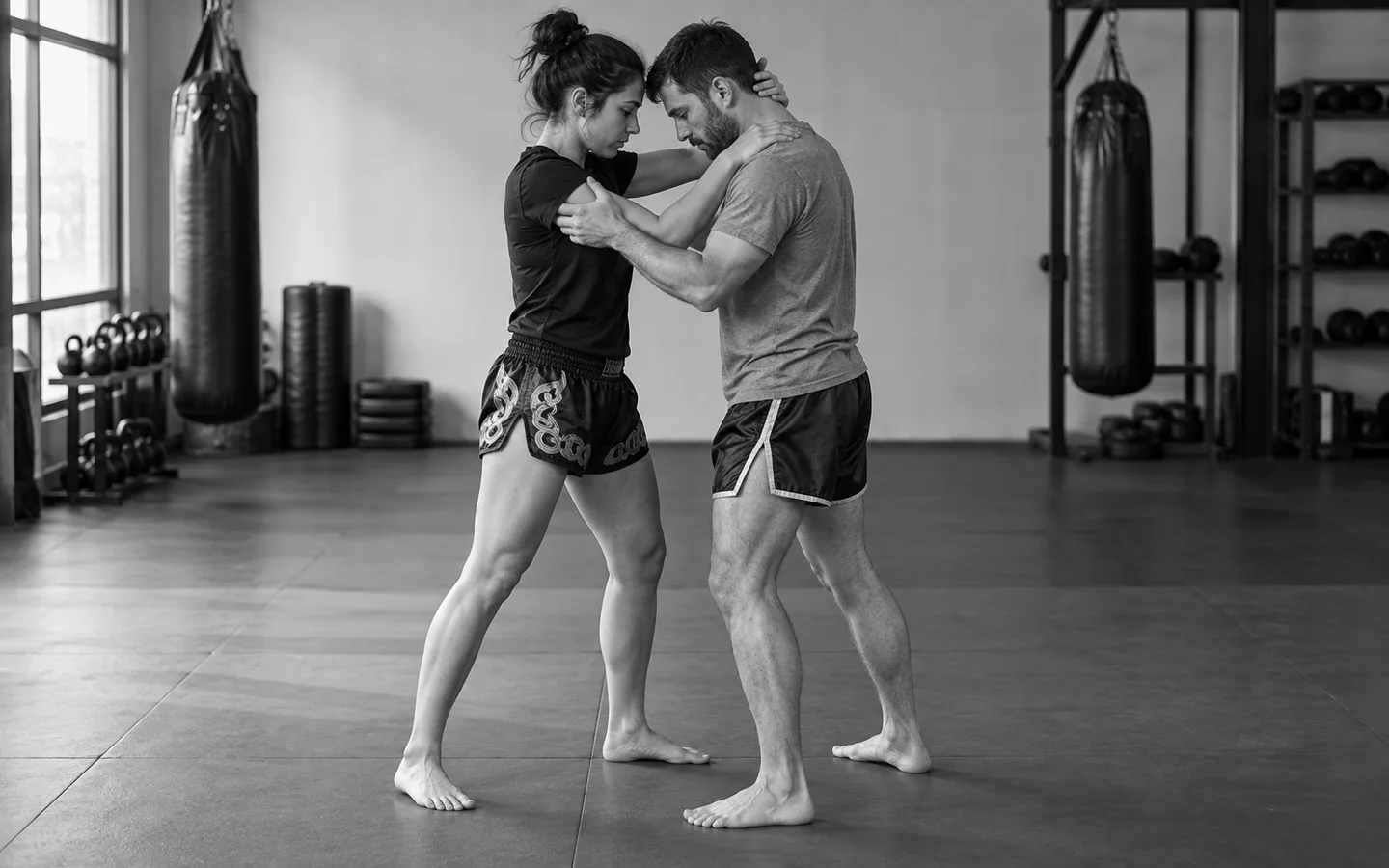
In the clinch, direct body contact lets each partner affect the other’s movement. There is less room for long attacks, and the placement of the body matters to balance and posture.
A grip can feel strong while leaving plenty of movement elsewhere. The player still has to notice what the partner can change and which direction remains available. Holding tighter does not answer every part of that problem.
Muay Thai includes knees, elbows and clinch work alongside punches and kicks. The applicable competition rules set what is allowed, with differences according to organisation, age and participant category.
A clip from a professional fight is therefore a poor substitute for an exercise plan. A class can study balance and body contact while deliberately excluding strikes with the knees or elbows.
Before an introductory clinch drill, the partners should know what they are examining. Posture, movement and noticing an opening are different tasks. Being told to “just try something” gives a beginner little to direct attention towards.
Close contact can feel demanding even in a calm exercise. A clear stop signal lets someone pause and reset. Doing so should not be treated as failing the task.
The clinch follows an exchange at another distance, and the next movement may take the fighters elsewhere. Studying the entry and the exit can reveal things a static grip exercise misses.
That does not require every lesson to cover all ranges. A narrow drill can remain useful, with the connection to the rest examined later. It keeps a technical question visible without making every attempt a complete match.
Skill First
Want to explore a question from this article on the mat? Find a suitable training option or discuss where you would like to start.
Discuss your questionExplore the question from another angle.
Striking
The clinch, knees and elbows help explain the differences. The name on a timetable is only a starting point.
Striking
If the distance is already gone, moving the hand faster may not solve the problem.
Striking
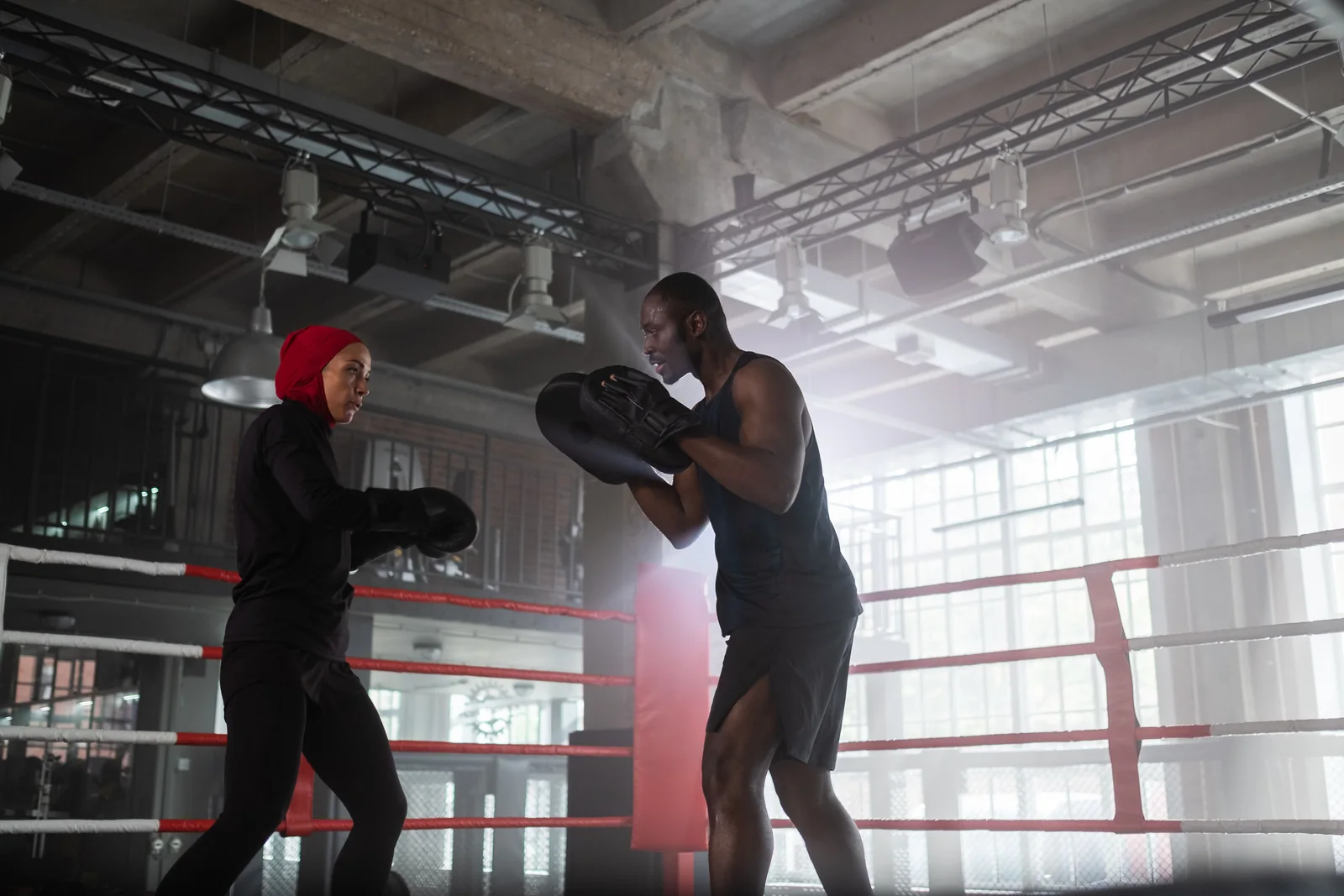
A smooth combination on pads can still fail against a moving partner. The exercises give different kinds of feedback.