
Grappling
What is Brazilian Jiu-Jitsu? What beginners learn on the mat
Why a grip can feel strong while the other person still escapes, and what positions and submissions have to do with it.
3 min read
Read articleGrappling
Being told that a position is “guard” helps follow the lesson. It still leaves a question: what are the legs doing, and how are they affecting the person on top?
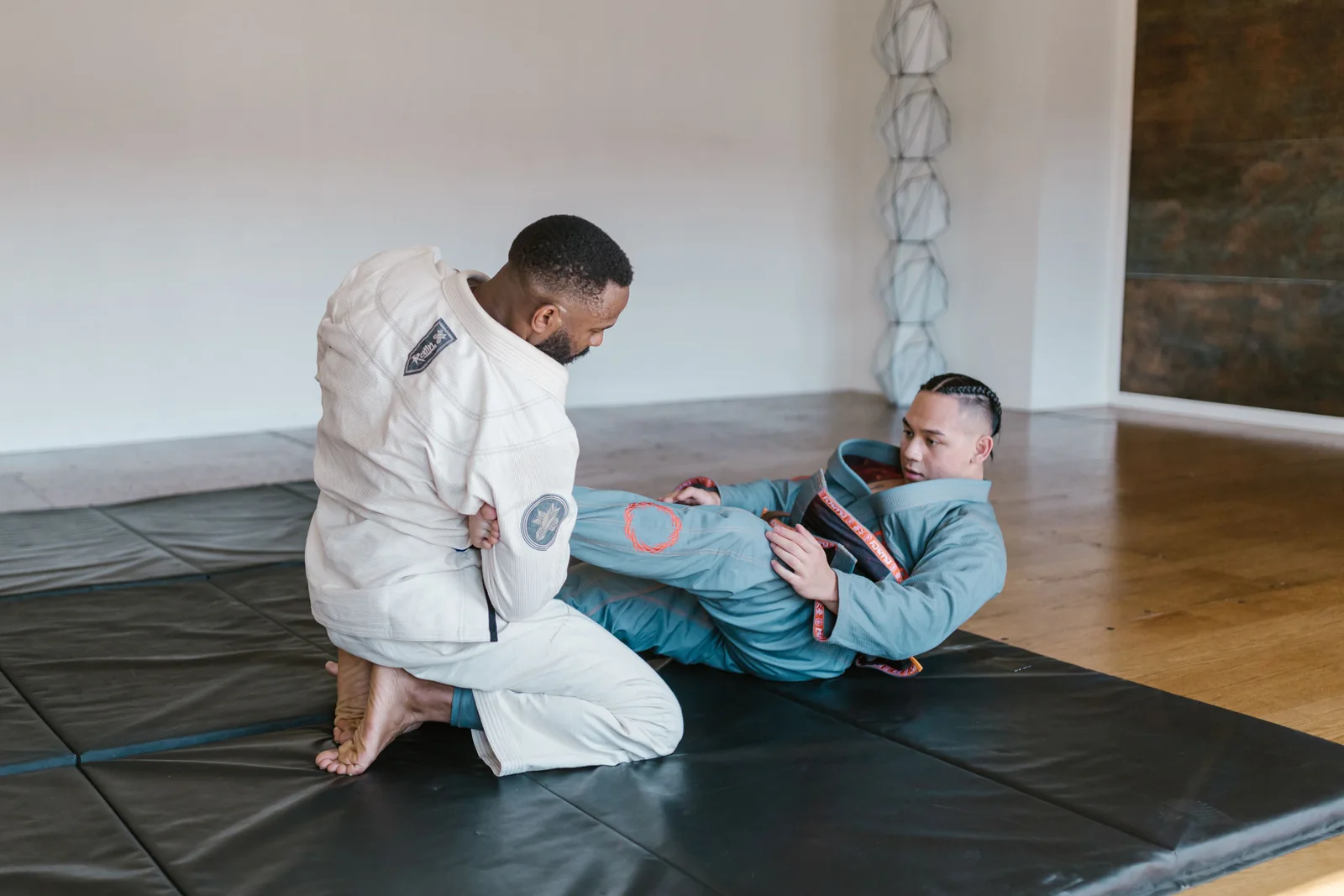
Guard, side control, mount and back control give BJJ players shared words for describing an exchange. Each contains many variations. Two pairs can both be working in guard while facing very different problems.
Use the name to get oriented, then look at the contact between the players. Which body part can move, and what is the partner trying to change? Those details tell more about the position than the label can on its own.
The bottom player uses their legs to influence the top player’s distance, movement and balance. The top player, among other tasks, tries to pass those legs. Being underneath does not by itself say who is succeeding.
A beginner can start by noticing how the legs affect the other person. Squeezing or holding harder may conceal that function. During a limited exercise, try to describe which movement is controlled and which remains available to the partner.
In side control the top player is beside the other player’s torso. In mount they are over it. Both are commonly called dominant positions, but arriving there does not finish the exchange. Keeping the position while the partner moves requires further work.
Back control brings different contact points and directions of movement. These positions are worth learning as situations that can change, rather than as trophies to collect. Each player still has to decide which movement to make possible and which to prevent.
A coach can set one starting position and a limited task, such as keeping contact while the partner moves. That gives a beginner time to notice the exchange without managing all the possibilities of a free round.
“The partner passed my legs after that contact broke” is a usable observation. “I am terrible at guard” is much harder to act on. Describing the change gives the next exercise a place to start.
Skill First
Want to explore a question from this article on the mat? Find a suitable training option or discuss where you would like to start.
Discuss your questionExplore the question from another angle.
Grappling
Why a grip can feel strong while the other person still escapes, and what positions and submissions have to do with it.
Grappling
Take away a sleeve grip and the position may need a different answer. Clothing affects control and movement, not just appearance.
Training & learning
Describe the grip, movement or moment that causes trouble, then give the coach something specific to watch.