
Grappling
What is Brazilian Jiu-Jitsu? What beginners learn on the mat
Why a grip can feel strong while the other person still escapes, and what positions and submissions have to do with it.
3 min read
Read articleGrappling
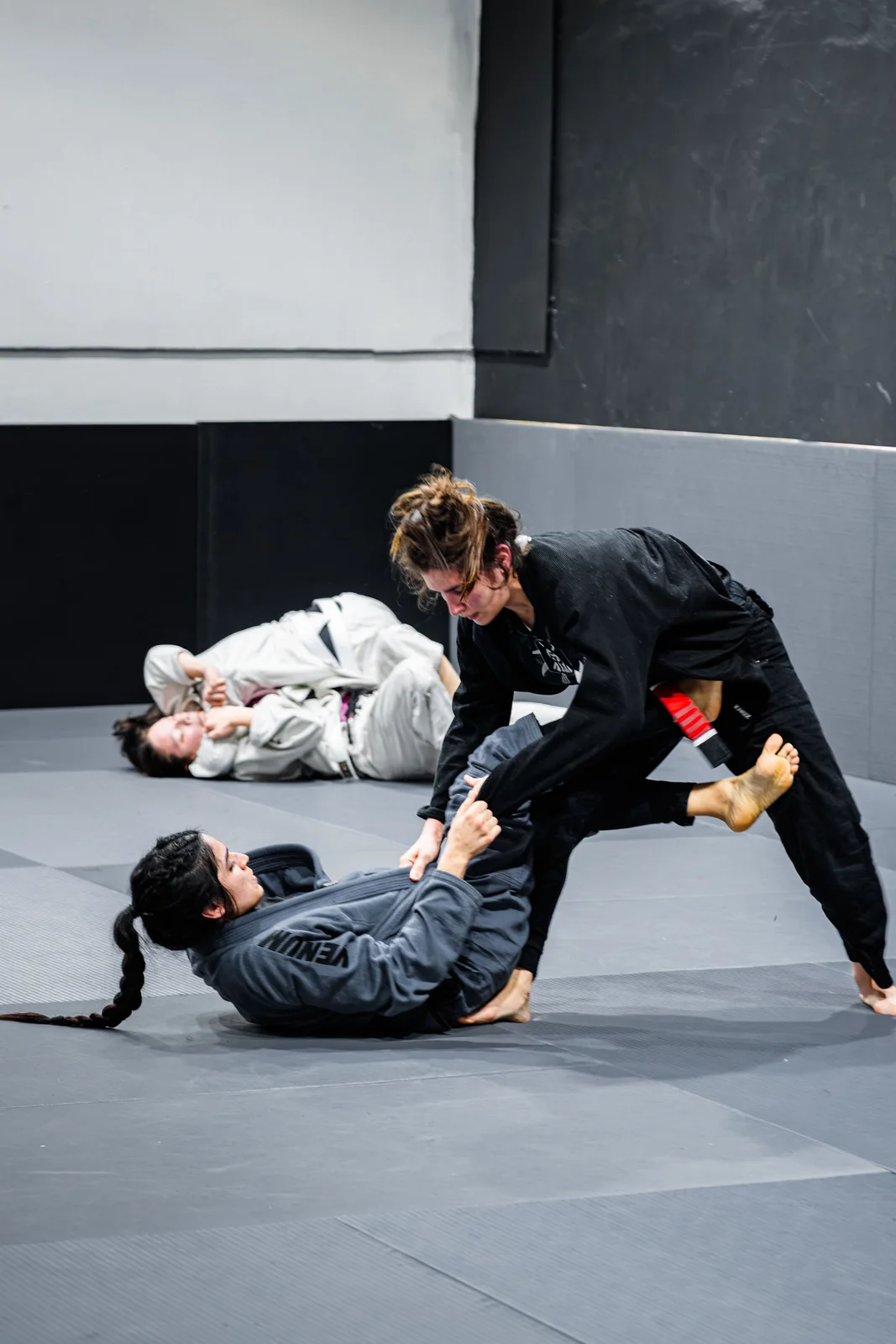
A sleeve grip can keep a partner close when body contact would slip. Remove it and the same position starts to feel different. That is a useful place to begin comparing gi BJJ and No-Gi.
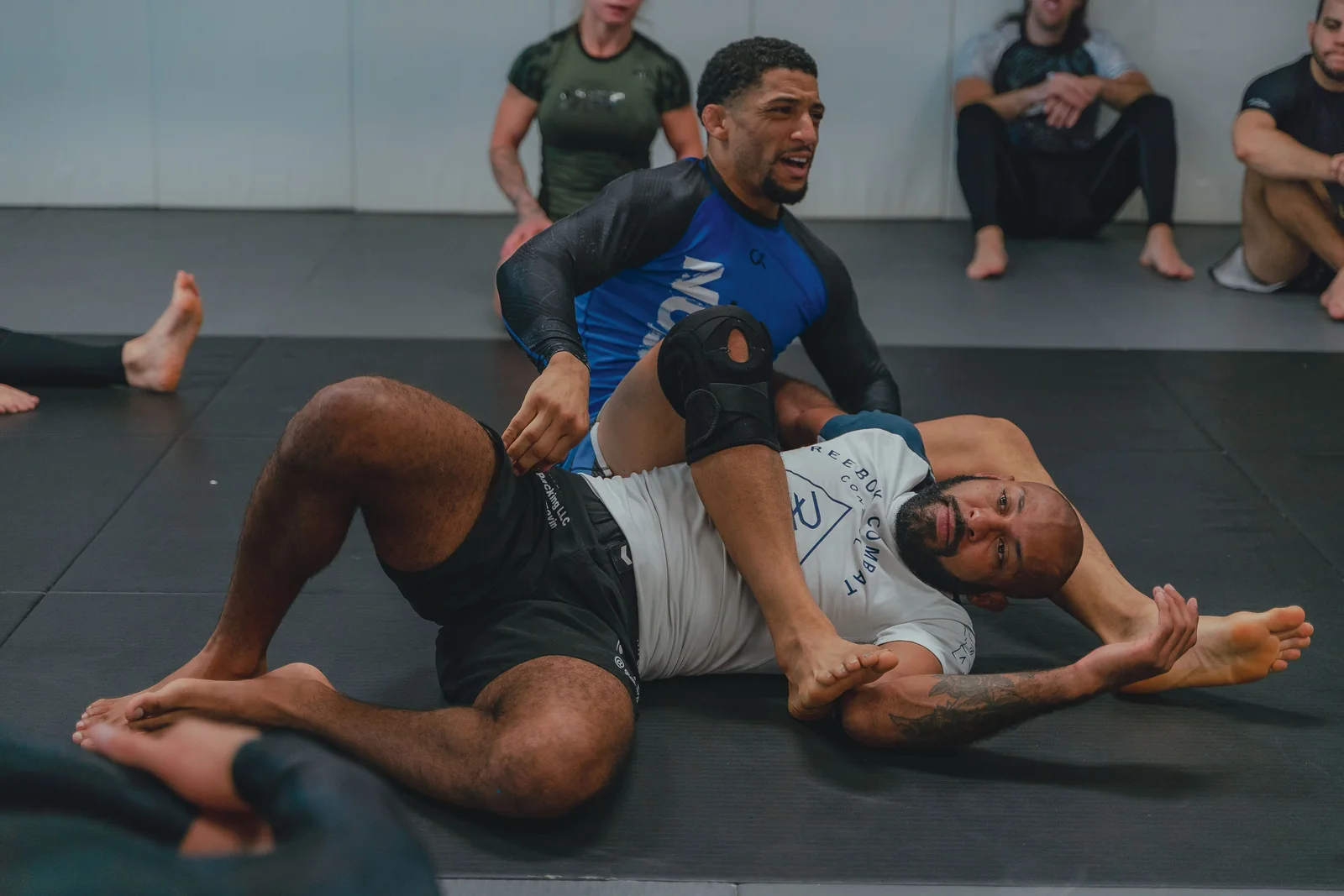
In gi BJJ, a sleeve, trouser leg or lapel can hold someone’s movement in check. Even a fairly small grip can affect the position of the whole body. In No-Gi, the uniform is no longer available: control has to come through contact with the body.
An escape built around peeling a sleeve grip, or an attack that depends on holding one, cannot transfer unchanged. Both players have to find another way to keep contact or change position. The difference shows up when trying to make space as much as when trying to close it.
No-Gi can feel more mobile because contact is easier to lose. It can also be slow and controlled when an experienced partner shuts down movement. Gi rounds can contain quick scrambles too. Clothing influences the exchange without setting a fixed pace for everyone.
Trying to outrun a partner is frustrating when their position keeps closing the same gap. Look at what holds the position together. Is it a clothing grip, the placement of the body, balance, or several things at once? Speed helps only if there is somewhere useful to go.
Guard, side control and back control appear in both formats. The aim of preventing a partner from improving their position may be familiar; the way to do it can change considerably. A grip that made the position straightforward in a gi may have no direct replacement in No-Gi.
Technique rules also vary with the organisation, age and level. Seeing a submission in a No-Gi video does not make it appropriate for a training round. Check what the coach and partner have agreed before trying it.
A claim that one format is automatically safer, smarter or more practical is a poor basis for choosing. The available classes, clear beginner instruction and a partner who respects the difference in experience matter much more. Interest counts too. It is reasonable to enjoy one format more than the other.
For someone learning both, shared problems with balance and space are worth noticing. Then look closely at where the answer changes. There is no need to treat the formats as unrelated disciplines, or to start both just to feel that the training is complete.
Skill First
Want to explore a question from this article on the mat? Find a suitable training option or discuss where you would like to start.
Discuss your questionExplore the question from another angle.
Grappling
Why a grip can feel strong while the other person still escapes, and what positions and submissions have to do with it.
Grappling
The name tells you where the players are. Their grips, balance and remaining room explain what can happen next.
Grappling
A tap can stop a submission, an uncomfortable position or a drill that has become unclear. Both partners have a responsibility.