
Self-defense
Self-defense training: what a demonstration cannot promise
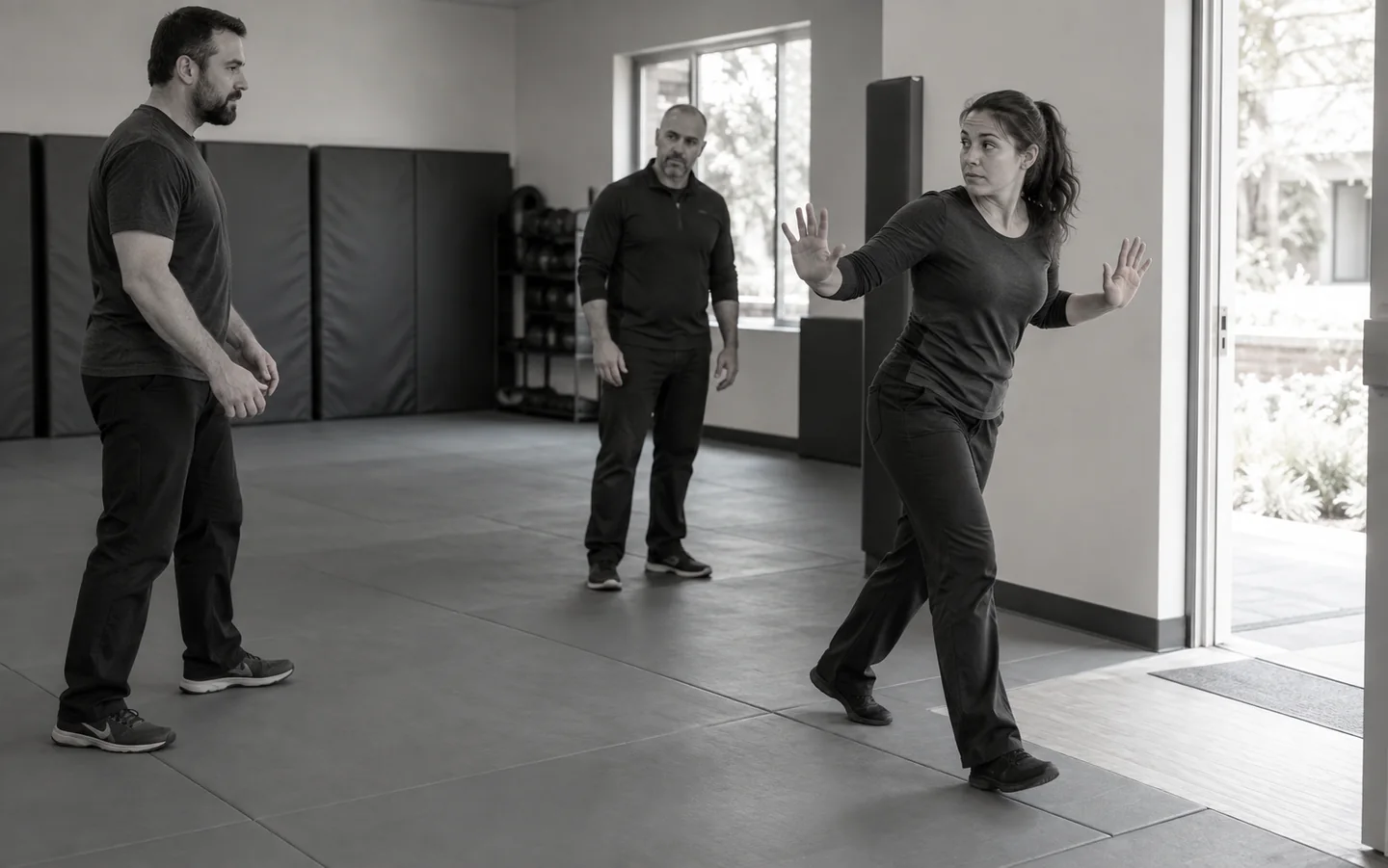
Known starts and cooperative partners make techniques easier to show. Training needs to be honest about what has been tested.
2 min read
Read articleSelf-defense
A programme described as “for women” still needs to explain what happens in the exercises. Participants can have very different needs, experiences and limits.

A women’s group can bring particular questions and a particular training setting. It should not lead the provider to assume every woman shares the same experiences or wants the same kind of practice. Ask which situations are discussed and how participants influence the tasks.
The programme name cannot provide a full outline. A clear description explains the exercises, the contact involved and the matters the training does not address. Someone should be able to assess that without first disclosing personal experiences.
Ask how the stop signal is introduced and what happens when someone uses it. Can a participant skip a task or take an alternative without explaining their reasons to the whole group? Those details make voluntary participation real.
Different limits can remain different throughout the session. The aim is not to get every participant to accept the same amount of contact. It is to leave room for a suitable choice and respect it.
One technique cannot be assumed to work in every situation. Space, circumstances and available options change. If a programme concentrates on fighting back harder, leaving and seeking help may receive less attention than they deserve.
A credible explanation admits what remains uncertain. It describes the conditions of the drill and does not turn success there into a prediction of real safety.
An example exercise and its limits can reveal much more than a general claim of suitability. For a private group or workshop, explain the purpose and who will attend, then ask how the programme fits those people.
Skill First’s service page sets out its offer for women. It can answer questions about training, while this article cannot evaluate a particular safety situation. Call 112 in immediate danger.
Skill First
Want to explore a question from this article on the mat? Find a suitable training option or discuss where you would like to start.
Discuss your questionExplore the question from another angle.
Self-defense
Known starts and cooperative partners make techniques easier to show. Training needs to be honest about what has been tested.
Self-defense
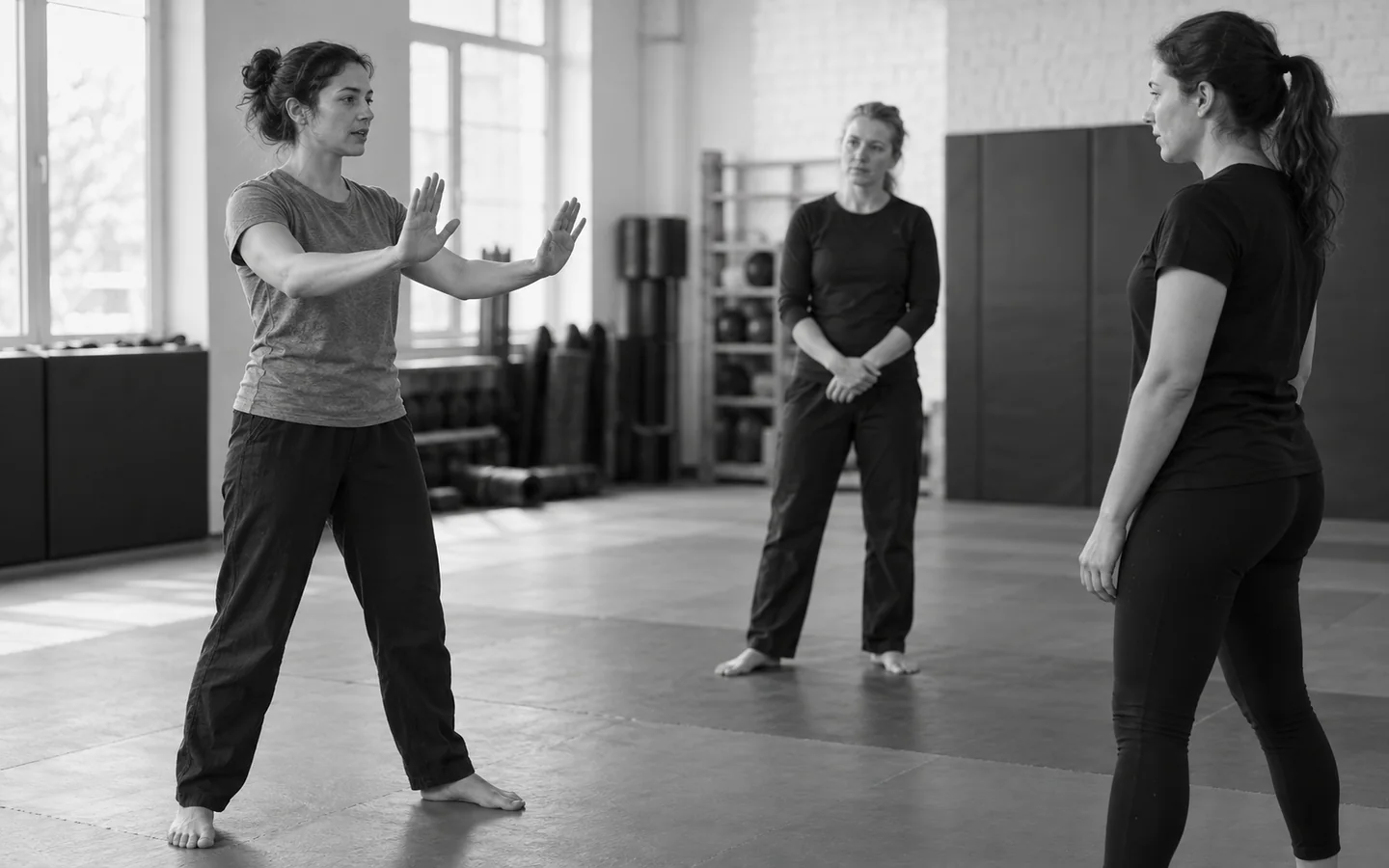
A partner approaching can be used to practise a boundary or an exit. The same drill can serve different goals.

Training & learning
Clothes, contact and the reason for bringing the group together all deserve a clear answer before participants arrive.