
Self-defense
Physical resilience or self-defense: what are you practising?
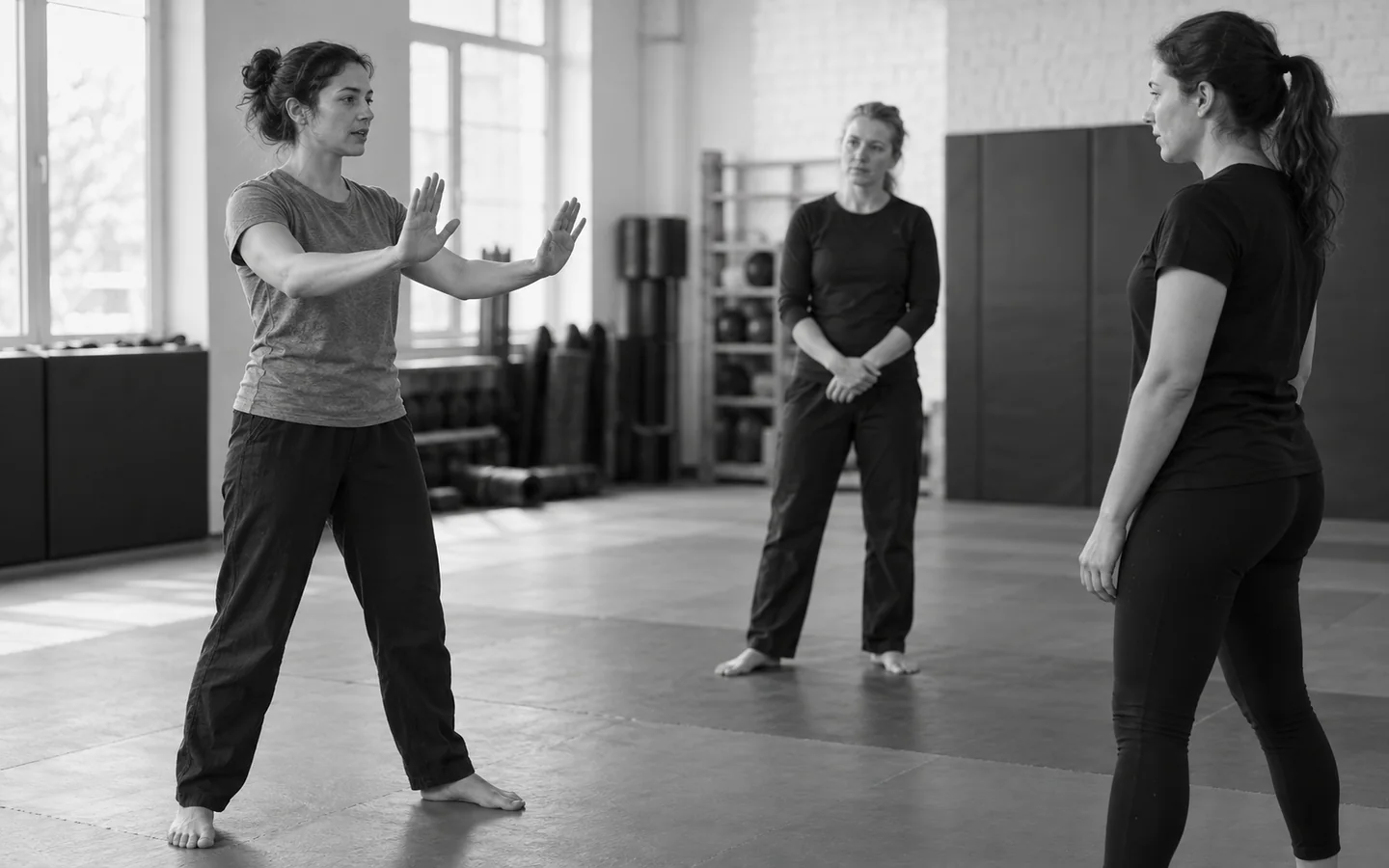
A partner approaching can be used to practise a boundary or an exit. The same drill can serve different goals.
2 min read
Read articleSelf-defense
A convincing demonstration may show a technique clearly. It cannot, on its own, show what happens when the other person reacts differently or the space is unfamiliar.
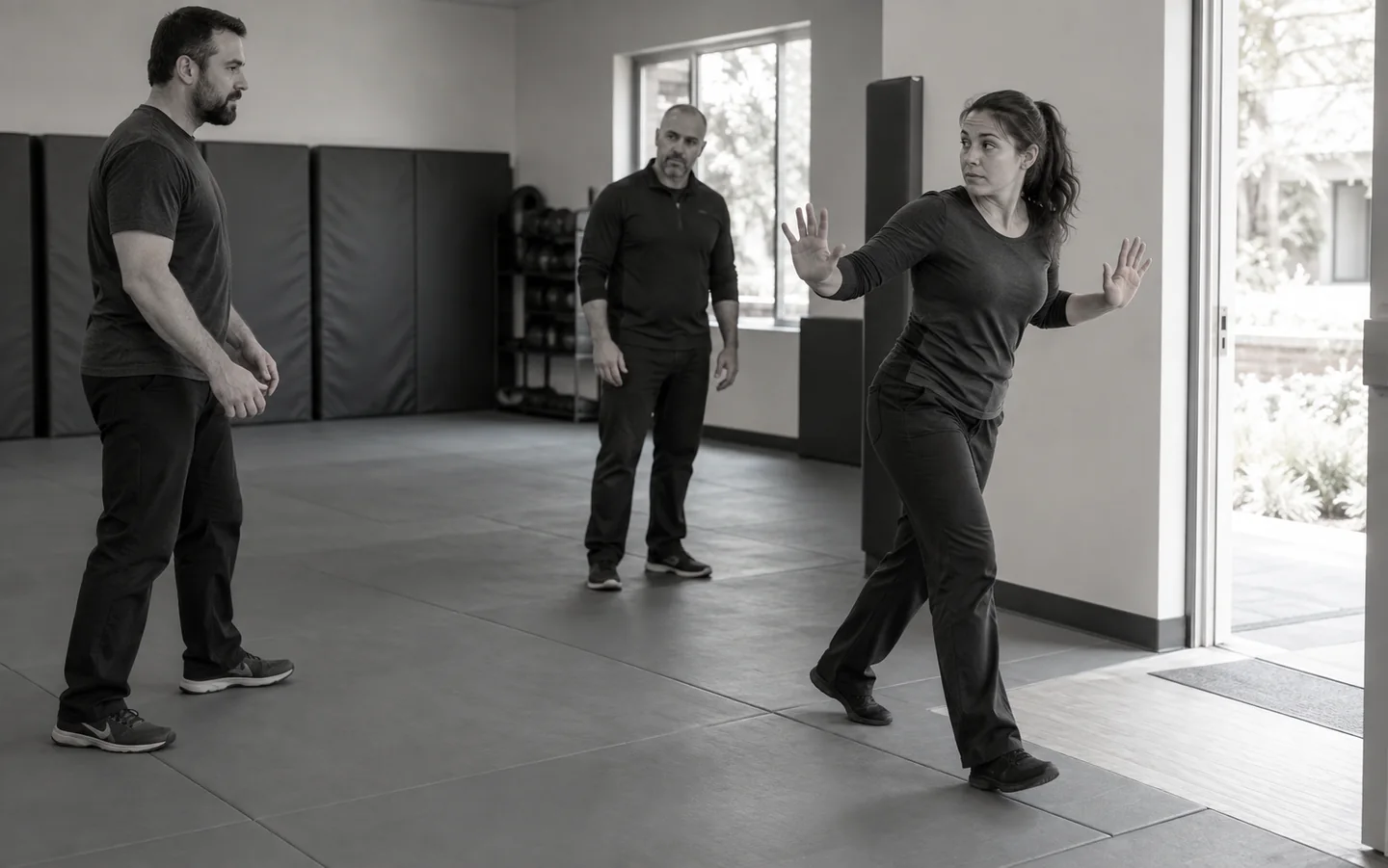
Demonstration partners usually have some idea of the starting position, speed and likely response. Those conditions make an explanation easier to follow. They also leave questions about what happens when the conditions change.
Is the partner standing still? Is the reaction agreed? Is the room familiar? A useful trainer can state those assumptions without concealing them. Then the reader or participant knows what the exercise has actually examined.
Physical techniques are easy to demonstrate and attract attention. Keeping space, avoiding moving closer, leaving and seeking help can look uneventful. They remain relevant choices.
A programme that shows only physical responses presents a narrow account of self-defense. Check the aim of the exercise. Leaving a threatening situation and winning a sporting position ask for different decisions.
The permitted contact should be explained before an exercise, and someone must be able to say that it does not suit them. An unexpected confrontation is a poor replacement for carefully introduced practice.
When pressure is added, the agreements remain in force. Participants can explore a difficult task while retaining the option to withdraw. Being unable to leave a training exercise gives little room to practise making one’s own choices.
A specific threat is different from a general training question. An article cannot assess the right response for an individual situation. Call 112 in immediate danger; official police contact information covers other enquiries.
For general training, ask for the aims, tasks and limits. A clear description allows the offer to be assessed without relying on a promise that a few lessons will supply an answer to every situation.
Skill First
Want to explore a question from this article on the mat? Find a suitable training option or discuss where you would like to start.
Discuss your questionExplore the question from another angle.
Self-defense
A partner approaching can be used to practise a boundary or an exit. The same drill can serve different goals.
Self-defense
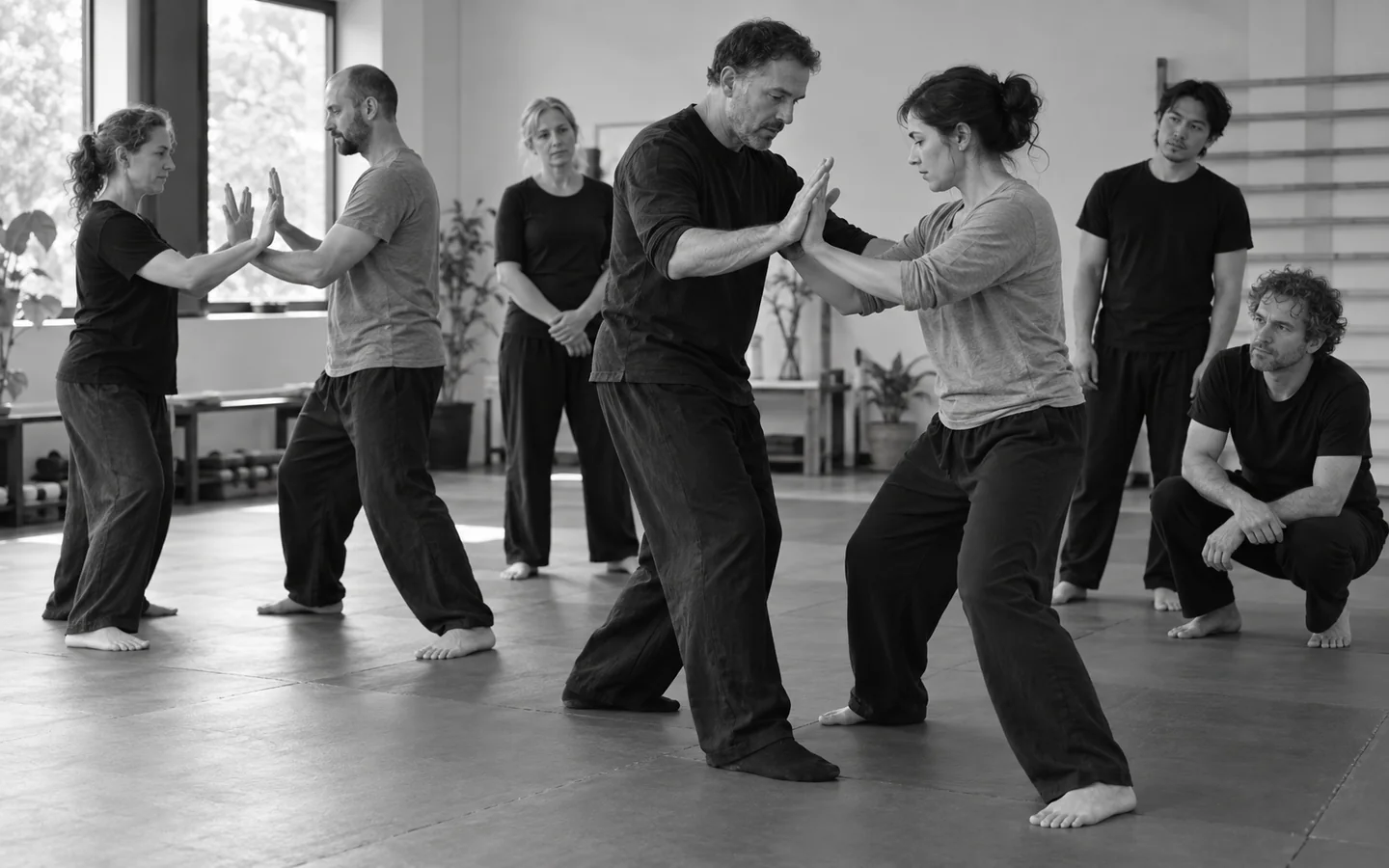
Distance, boundaries and choices can be practised with a partner. A useful programme explains what it does and what it cannot promise.

Self-defense
Ask how contact, stop signals and participation work in practice. An appealing programme name cannot answer those questions.