
Self-defense
Physical resilience or self-defense: what are you practising?
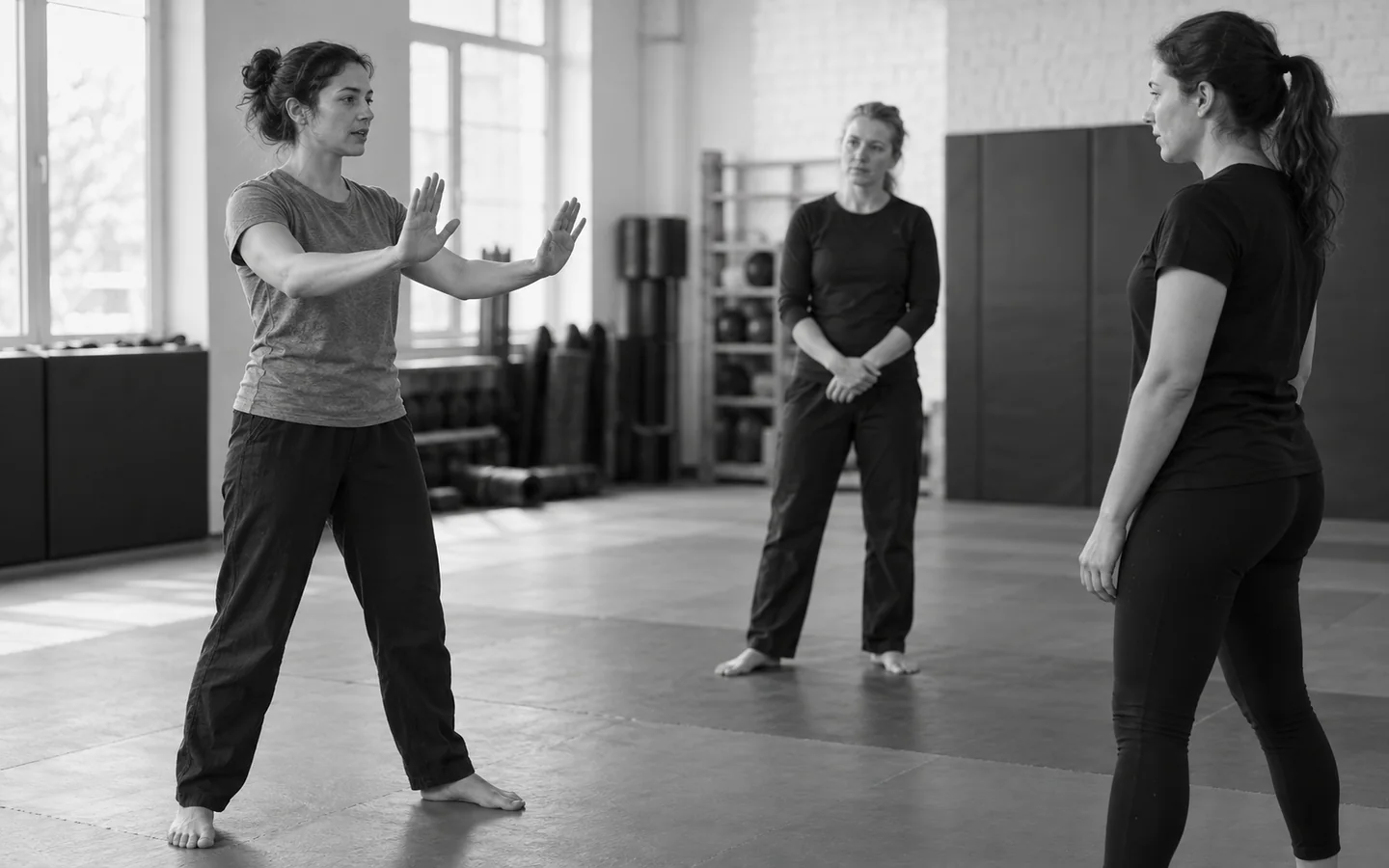
A partner approaching can be used to practise a boundary or an exit. The same drill can serve different goals.
2 min read
Read articleSelf-defense
“Resilience” appears on plenty of programme descriptions. Before choosing one, ask what will happen in the room: which exercise, with whom, and what happens if someone wants to stop?
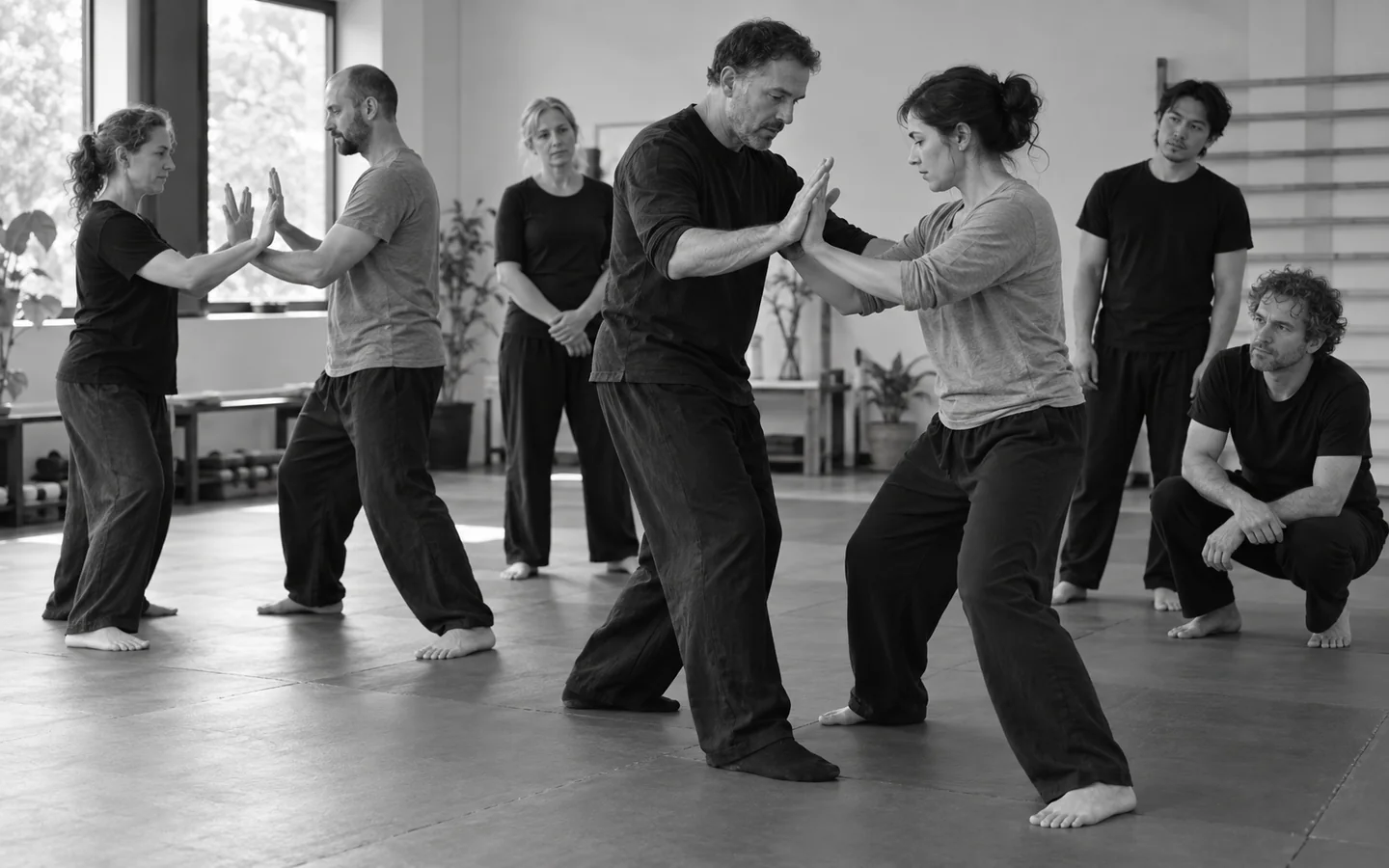
Physical resilience training can mean several things. Here it refers to practical training using martial arts exercises, such as recognising distance, stating a boundary and moving as a partner approaches under agreed conditions.
It is separate from therapy, psychomotor treatment and mental health care. A trainer should be able to describe the physical work without promising broad medical or psychological benefits. The details of a session are a better guide than the label alone.
Naming a boundary is one skill. Noticing that a partner has come closer, and finding how much room remains, is another. In a supervised exercise, those situations can be explored with someone who knows the task and respects the agreements.
There need not be a perfect response to memorise. Participants can notice what they see and which choices are available. Asking for space, pausing or declining an exercise may be the appropriate action. A boundary should be respected during the task, without waiting for a discussion afterwards.
The mat offers rules, guidance and someone who has agreed to practise. An actual conflict may offer none of those things. Success in an exercise cannot guarantee that a technique will control a situation outside training.
Leaving, making distance and getting help may matter much more than continuing to respond physically. This article cannot assess a particular threat or provide personal safety advice for it. In immediate danger, call 112.
Find out who the programme is for, what experience it assumes and how the physical tasks develop. A session suitable for adults is not automatically suitable for children. A workplace workshop also has different aims from individual training.
Skill First’s Zwolle service page describes its local physical resilience offer. Comparing that description with what a self-defense programme actually practises can help someone choose according to the question they want to explore.
Skill First
Want to explore a question from this article on the mat? Find a suitable training option or discuss where you would like to start.
Discuss your questionExplore the question from another angle.
Self-defense
A partner approaching can be used to practise a boundary or an exit. The same drill can serve different goals.
Self-defense
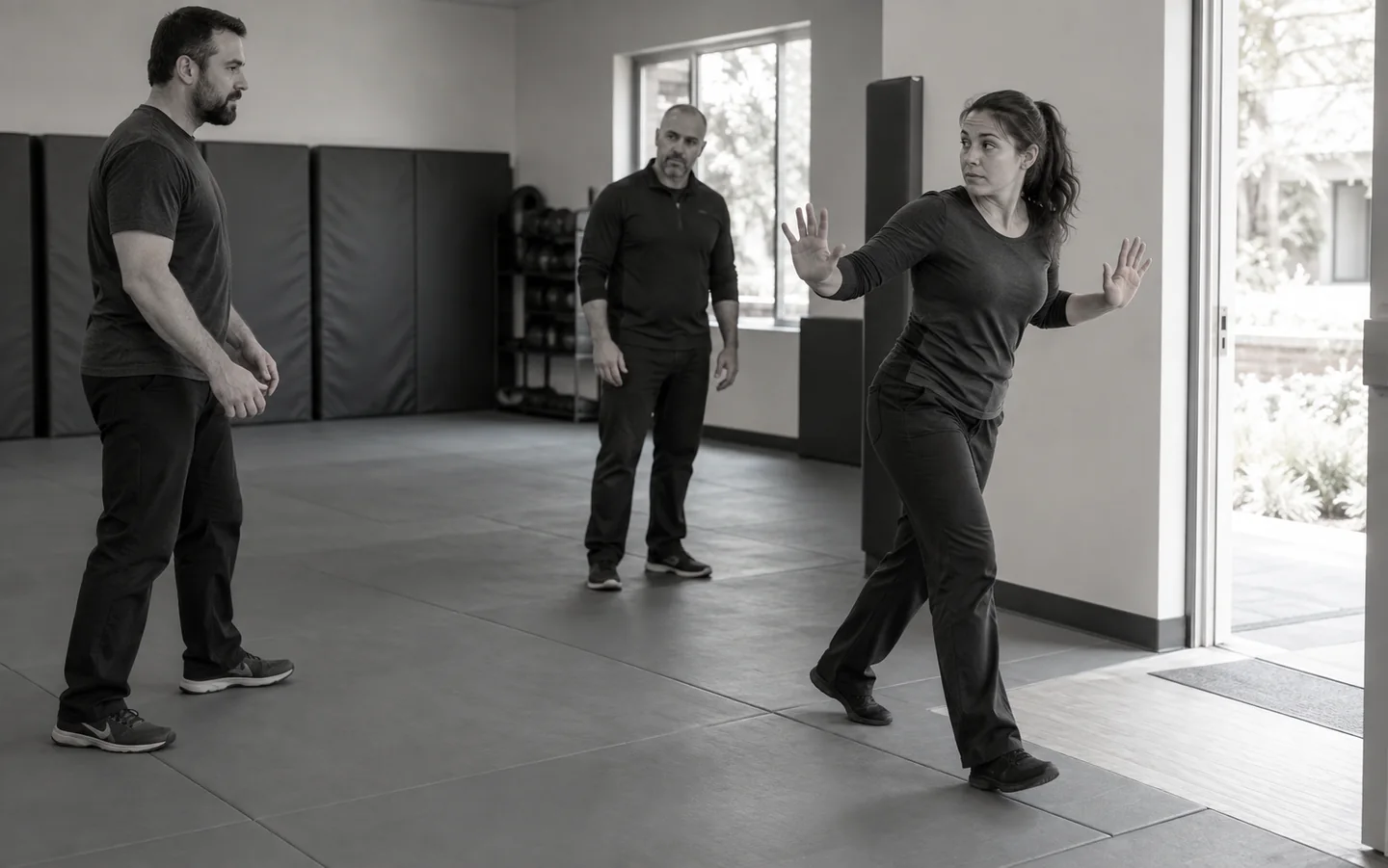
Known starts and cooperative partners make techniques easier to show. Training needs to be honest about what has been tested.
Training & learning
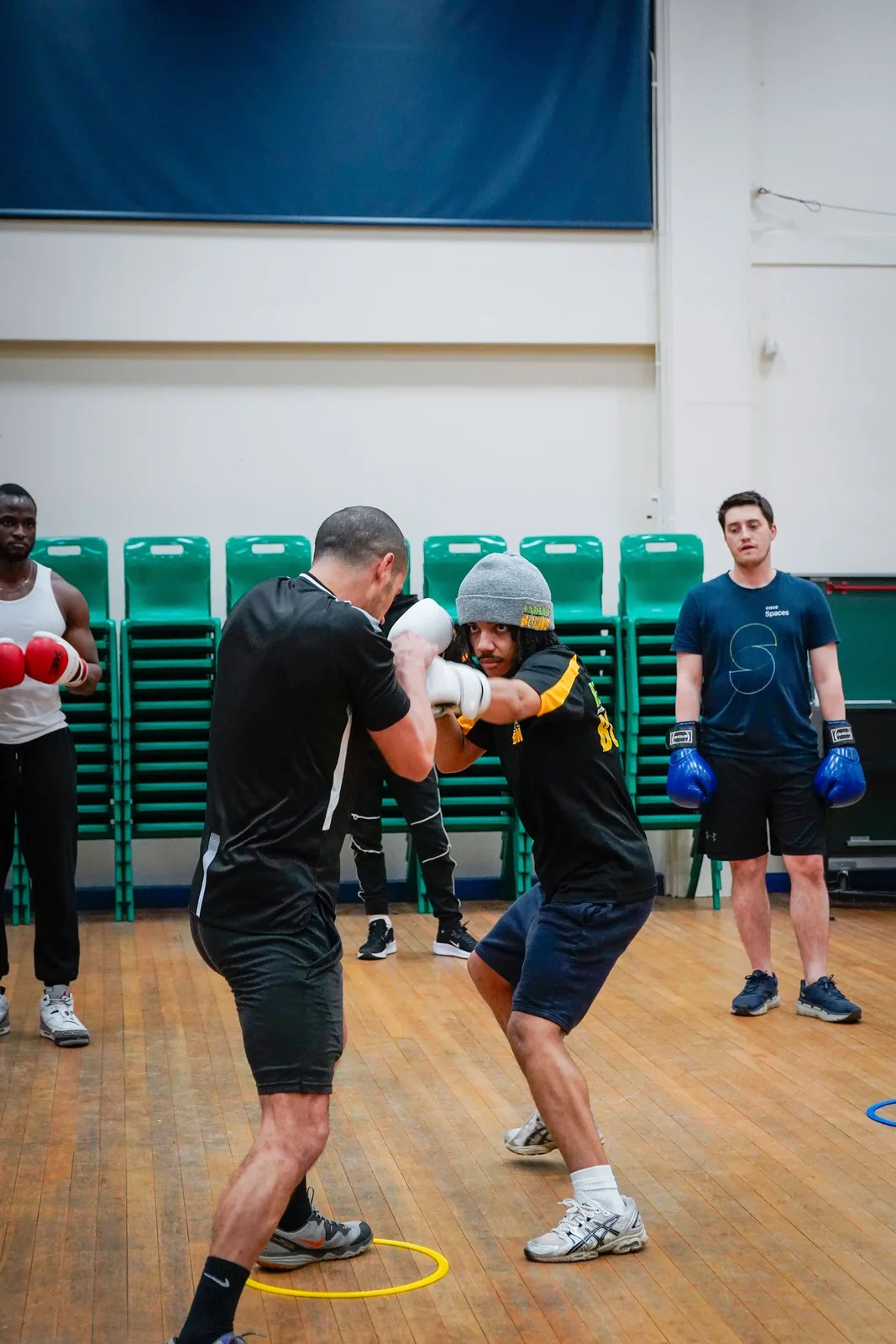
Clothes, contact and the reason for bringing the group together all deserve a clear answer before participants arrive.